 Lunarya
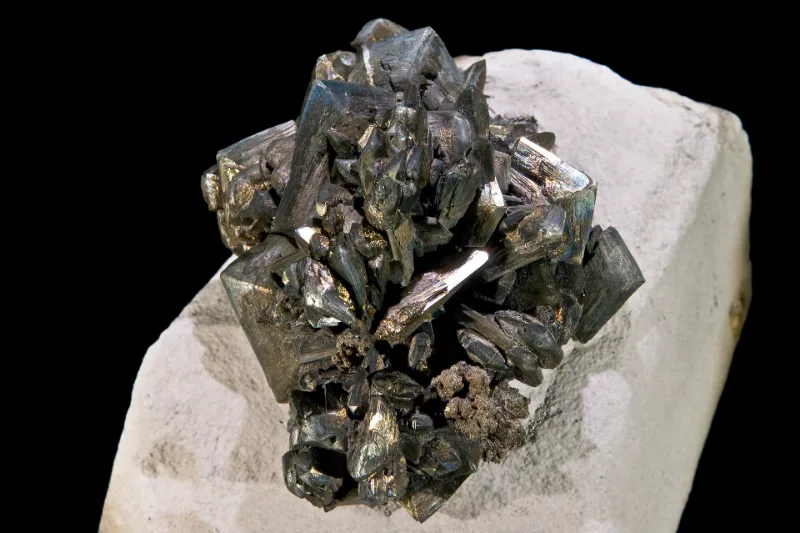
Marcasite
Marcasite is iron sulfide, FeS₂ — the same formula as pyrite, in a different crystal system. Where pyrite is cubic and brassy, marcasite is orthorhombic and paler, closer to tin-white when fresh, and it grows in flat blades that twin into ridged groups the old miners called cockscombs and spearheads. Hardness 6 to 6.5, brittle, with a green-black streak.
The thing to know about marcasite is that it is not stable. In humid air it oxidises, and the reaction makes iron sulfate and sulfuric acid; the specimen crumbles to a white or yellow powder, the acid attacks the label and the box, and it can take neighbouring specimens with it. Museums call the problem pyrite disease, though marcasite suffers it far worse than pyrite does. There is no cure once it starts — only dry air, low humidity and separation.
In short
- Colour
- Dark
- Mineral
- Sulfide
- Formula
- FeS₂
- Hardness
- 6–6.5 on the Mohs scale
- Crystal system
- Orthorhombic
- Found in
- The chalk of southern England and northern France, where it forms nodules; Reocín in Spain; the Tri-State district of Missouri, Kansas and Oklahoma; the Czech Republic; Germany; and the coal measures of most of Europe.
- Element
- Earth
- Planet
- Mercury
- Chakra
- Solar plexus
- Handling
- Keep out of water
How it forms
Marcasite forms in cooler, more acidic water than pyrite does, near the surface rather than deep: in chalk and clay, in coal seams, in low-temperature veins, and around rotting organic matter on a sea floor. That low-temperature origin is why it is unstable at the surface — it grew in a chemical environment that the open air does not resemble at all.
In human hands
The name goes back through medieval Latin to an Arabic word for pyrite, and for centuries marcasite meant any brassy sulfide. Its odd fame is in jewellery: marcasite jewellery, the little faceted grey stones set in silver that were fashionable in the eighteenth century and again in the 1920s, is made of pyrite, not marcasite. The trade kept the prettier name and used the stable mineral, which was the sensible choice.
Varieties and trade names
- Cockscomb marcasite
- Twinned blades standing in a ridged crest; the classic habit and the one collectors want.
- Spear pyrites
- Arrow-shaped twins, an old English name from the chalk pits of Kent and Sussex.
- Chalk nodules
- Rounded lumps with a radiating internal structure, weathering out of cliffs and ploughed fields.
- Marcasite jewellery
- Faceted grey stones in silver, Victorian and Art Deco; almost always pyrite under the marcasite name.
- Pyrite
- The stable cubic dimorph, brassier and cubic, which has a page of its own here.
Telling it from a fake
Against pyrite: marcasite is paler and greyer, its crystals are tabular and twinned rather than cubic, and it tarnishes and crumbles where pyrite mostly does not. A specimen that smells faintly of sulfur, sweats yellow powder or has dulled to a chalky crust is marcasite going over. Arsenopyrite is whiter still and smells of garlic when struck, which is arsenic and a reason not to strike it.
None of this needs a laboratory, and none of it is proof. A shop that will not say whether a stone is treated has answered the question; ask, and have the answer written on the receipt.
What it is said to do
The crystal literature reads it as a mirror stone: seeing oneself as one is, looking at what one would rather not, and the unglamorous work that follows. It is given to Mercury, to Virgo and Capricorn, and to the solar plexus. The reading is modern and leans on the metallic surface; the older tradition attached to the name belongs to pyrite, since for most of history the two were not distinguished.
Living with it
The most demanding storage of anything on this site. Keep it dry, cool and separate: a closed box with a sachet of silica gel, away from other specimens and away from paper labels, which the acid destroys. Never wash it. If it begins to sweat or smell, isolate it at once — it will not recover, and it will damage what is next to it.
In magic
Marcasite's magical uses are mostly pyrite's, under the jeweller's name, which for centuries meant both: mirrors, money and protection that sends harm back. Modern practice uses true marcasite for self-reflection, seeing oneself as one is. It decays in damp air, so it is never washed or put in a ritual bath, and lives in a dry box with silica gel.
- Energy
- Receptive
- Day
- Wednesday
- Worked for
- Study and clear thinking
More of this colour
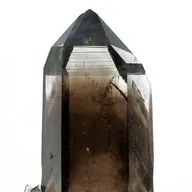 Smoky quartz
Quartz turned brown by the radioactivity of its own bedrock.
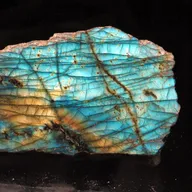 Labradorite
A dull grey stone until you turn it, and then it is peacock blue.
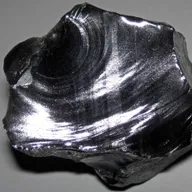 Obsidian
Volcanic glass with an edge finer than a surgical steel blade.
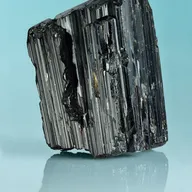 Black tourmaline
The stone that pulls ash out of a pipe when you warm it.
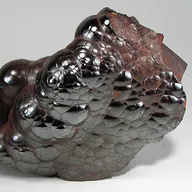 Hematite
Black as a mirror, and it leaves a blood-red line on anything you scratch it against.
Agni manitite
A black glass from Java, sold as a tektite; volcanic, as it turns out.
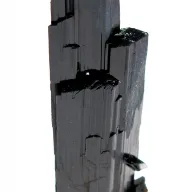 Arfvedsonite
A black amphibole with a blue flash, named for the man who found lithium.
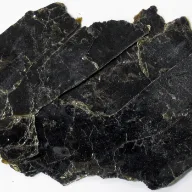 Biotite
Black mica: the flakes in every granite, and sheets big enough to roof a shed.
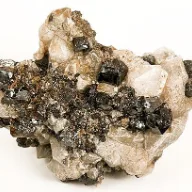 Brookite
Titanium dioxide in its rarest shape: thin red-brown blades grown in Alpine cracks.
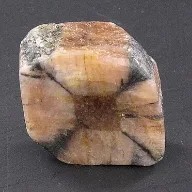 Chiastolite
An andalusite that grows a dark cross inside itself, and was sold for centuries as a Christian charm.
Columbianite
Colombian volcanic glass, sold as a tektite it is not.
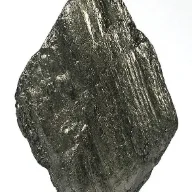 Graphite
Carbon in its soft form: the same element as diamond, stacked in sheets that slide.
 Aegirine
Black pyroxene needles from the strangest rocks on the planet.
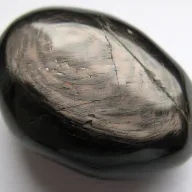 Hypersthene
A bronze-sheened pyroxene whose name the mineralogists retired.
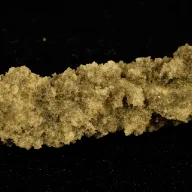 Fulgurite
Sand struck by lightning and fused, in a second, into hollow glass.
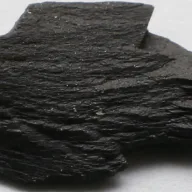 Jet
Fossil driftwood, black and warm in the hand, and Victorian mourning.
Indigo gabbro
A Madagascan rock sold under a wizard name it was given in 2010.
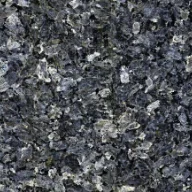 Larvikite
Norway's national rock, and the blue flash on half the shop fronts in Europe.
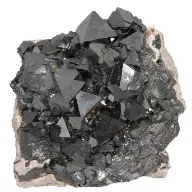 Magnetite
The most magnetic mineral there is, and the first compass.
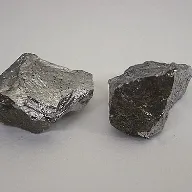 Manganese
The metal that makes steel tough, and that never occurs native.
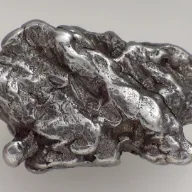 Campo del Cielo
An iron meteorite that fell on the Argentine Chaco four thousand years ago.
 Nuummite
Three-billion-year-old Greenlandic rock that flashes gold and copper.
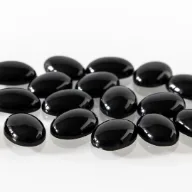 Onyx
Straight-banded chalcedony, and the black stone that is nearly always dyed.
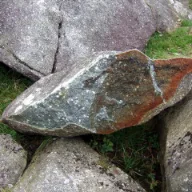 Preseli bluestone
The spotted dolerite of Stonehenge, from a Welsh hillside 250 kilometres away.
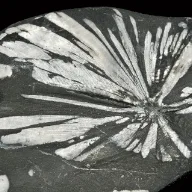 Chrysanthemum stone
Black rock with white mineral flowers that are not fossils.
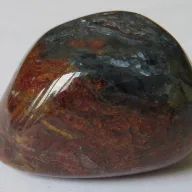 Pietersite
Tiger's eye smashed and cemented back together, so the light swirls.
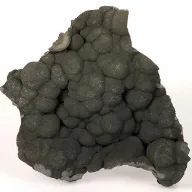 Psilomelane
A field name for the hard black manganese ores, kept alive by lapidaries.
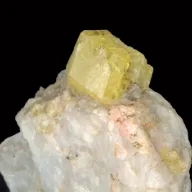 Rhodizite
A caesium borate as hard as topaz, and about as rare as minerals get.
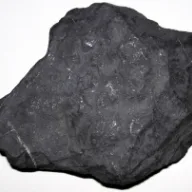 Shungite
Two-billion-year-old carbon rock from Karelia, and a great deal of nonsense.
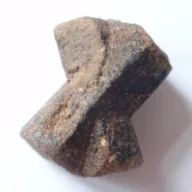 Staurolite
Two crystals grown through each other at sixty degrees, which comes out as a cross.
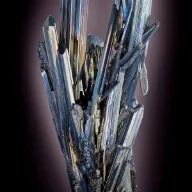 Stibnite
Steel-grey swords in a spray, soft enough to mark with a fingernail, and poisonous.
 Terahertz stone
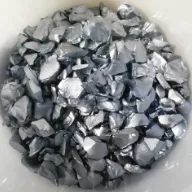
Furnace silicon, cut into beads and sold on a claim about radiation it does not emit.