 Lunarya
Indigo gabbro
Indigo gabbro is not a mineral but a rock: gabbro, the coarse-grained plutonic twin of basalt, made of plagioclase feldspar, pyroxene and magnetite with chlorite and mica through it. Polished, it is a mottle of black, slate grey and lavender, with a faint sheen where the feldspar catches the light. It is quarried in southern Madagascar and sold almost everywhere under the invented name mystic merlinite.
The trade name is a problem worth stating plainly. There is no mineral called merlinite. The word has been attached to at least three unrelated materials: this Malagasy gabbro, a black-and-white dendritic agate from New Mexico, and a dendritic opal, and a buyer asking for merlinite may be handed any of them. The lavender cast in good indigo gabbro is the plagioclase, which is close to labradorite in composition; the black is pyroxene and magnetite, and a strong magnet will tug faintly at a piece with much magnetite in it. The green patches are chlorite after pyroxene.
In short
- Colour
- Dark
- Mineral
- A rock, not one mineral
- Formula
- (Ca,Na)AlSi₃O₈ + (Mg,Fe)SiO₃ + Fe₃O₄
- Hardness
- 5–6 on the Mohs scale
- Crystal system
- None — it is a rock
- Found in
- Southern Madagascar, in the region inland of Toliara, is the only commercial source of the polished stone. Gabbro itself is among the commonest rocks on Earth: it makes up most of the lower oceanic crust, and layered gabbro intrusions are quarried worldwide for the countertop trade under names like black granite.
- Element
- Water
- Planet
- Neptune
- Chakra
- Crown
- Handling
- Water and light are both fine
How it forms
Basaltic magma collects in a chamber deep in the crust and cools over thousands of years. Slow cooling means large crystals, so plagioclase and pyroxene grow to a few millimetres and interlock; magnetite crystallises among them. Later, hot water moving through the cooling body alters some of the pyroxene to chlorite, which is where the green comes from, and it is that alteration, patchy by nature, that gives the rock its mottled look.
In human hands
The rock name comes from Gabbro, a hamlet in Tuscany, borrowed into geology by Leopold von Buch in 1810. The stone on this page, though, has no history to speak of: Malagasy cutters began exporting it in about 2010, the name mystic merlinite was coined for the market, and everything written about its properties has been written since. That is not a criticism of the stone, which is handsome and takes a fine polish. It is simply worth knowing when a description claims an ancient tradition.
Varieties and trade names
- Mystic merlinite
- The trade name for this rock; spheres, towers, palm stones and slabs, all from Madagascar.
- Merlinite
- A different stone: black-and-white dendritic agate or opal from New Mexico, with manganese oxide trees in it.
- Larvikite
- The Norwegian monzonite with blue-flashing feldspar, a close cousin in look and in geology.
- Black granite
- Gabbro and gabbronorite cut for building; the Bushveld material is the best known.
- Leucogabbro
- The pale variant, feldspar-rich, where the lavender is the dominant colour rather than the black.
Telling it from a fake
Look at it closely: individual crystals a millimetre or two across, interlocking, with no banding and no bands of one colour crossing the piece. That coarse texture is the mark of a plutonic rock, and it rules out agate, obsidian and anything sedimentary. A magnet responds slightly. If the stone is banded black and white with tree-shaped dendrites, it is the other merlinite. If it flashes bright blue across a whole face, it is labradorite or larvikite.
None of this needs a laboratory, and none of it is proof. A shop that will not say whether a stone is treated has answered the question; ask, and have the answer written on the receipt.
What it is said to do
The modern reading is about shadow work: sitting with the parts of oneself that are usually avoided, and the slow patience that takes. It is given to Neptune, to Scorpio and Pisces, and to the crown. The name invites a story about Merlin and magic, and the crystal literature duly supplies one, but the stone was on nobody's desk before this century and no older tradition is available to draw on.
Living with it
An easy stone to own. It is hard enough for daily handling, water does no harm, and sunlight does not fade it. The polish is the only thing to protect: store it away from quartz and other harder stones, which will scratch the surface and take the lavender sheen down with them.
In magic
Indigo gabbro, sold since the 2000s as mystic merlinite, is used in modern practice for shadow work — looking at what one usually avoids — and for divination. The Merlin in the trade name is all the magical history it has. It is hard and safe in water and light.
- Energy
- Receptive
- Day
- Thursday
- Worked for
- Divination and intuition
More of this colour
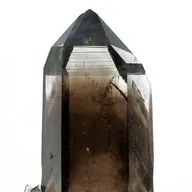 Smoky quartz
Quartz turned brown by the radioactivity of its own bedrock.
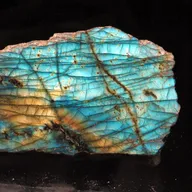 Labradorite
A dull grey stone until you turn it, and then it is peacock blue.
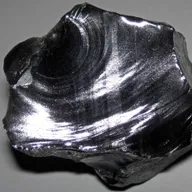 Obsidian
Volcanic glass with an edge finer than a surgical steel blade.
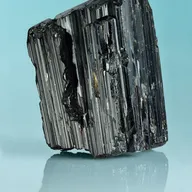 Black tourmaline
The stone that pulls ash out of a pipe when you warm it.
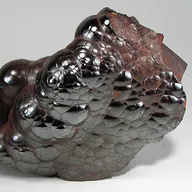 Hematite
Black as a mirror, and it leaves a blood-red line on anything you scratch it against.
Agni manitite
A black glass from Java, sold as a tektite; volcanic, as it turns out.
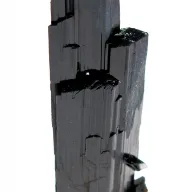 Arfvedsonite
A black amphibole with a blue flash, named for the man who found lithium.
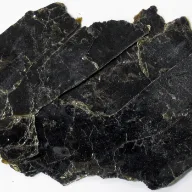 Biotite
Black mica: the flakes in every granite, and sheets big enough to roof a shed.
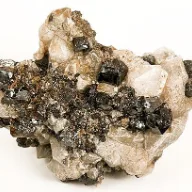 Brookite
Titanium dioxide in its rarest shape: thin red-brown blades grown in Alpine cracks.
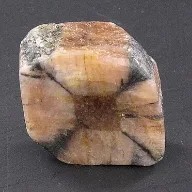 Chiastolite
An andalusite that grows a dark cross inside itself, and was sold for centuries as a Christian charm.
Columbianite
Colombian volcanic glass, sold as a tektite it is not.
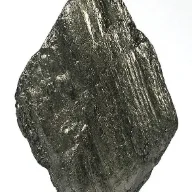 Graphite
Carbon in its soft form: the same element as diamond, stacked in sheets that slide.
 Aegirine
Black pyroxene needles from the strangest rocks on the planet.
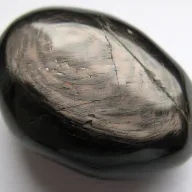 Hypersthene
A bronze-sheened pyroxene whose name the mineralogists retired.
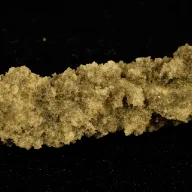 Fulgurite
Sand struck by lightning and fused, in a second, into hollow glass.
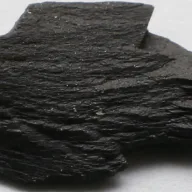 Jet
Fossil driftwood, black and warm in the hand, and Victorian mourning.
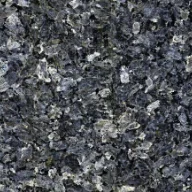 Larvikite
Norway's national rock, and the blue flash on half the shop fronts in Europe.
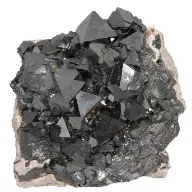 Magnetite
The most magnetic mineral there is, and the first compass.
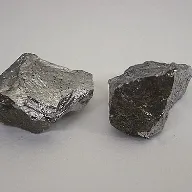 Manganese
The metal that makes steel tough, and that never occurs native.
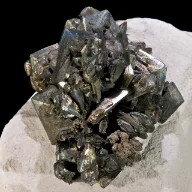 Marcasite
Pyrite's unstable twin, which eats itself in a damp drawer.
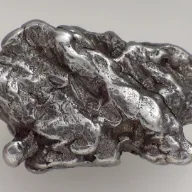 Campo del Cielo
An iron meteorite that fell on the Argentine Chaco four thousand years ago.
 Nuummite
Three-billion-year-old Greenlandic rock that flashes gold and copper.
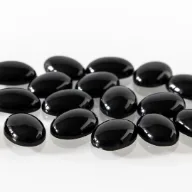 Onyx
Straight-banded chalcedony, and the black stone that is nearly always dyed.
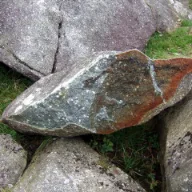 Preseli bluestone
The spotted dolerite of Stonehenge, from a Welsh hillside 250 kilometres away.
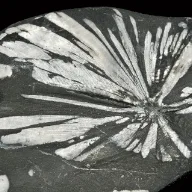 Chrysanthemum stone
Black rock with white mineral flowers that are not fossils.
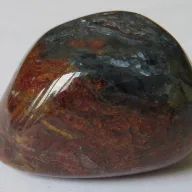 Pietersite
Tiger's eye smashed and cemented back together, so the light swirls.
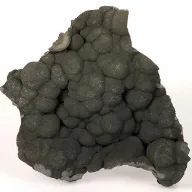 Psilomelane
A field name for the hard black manganese ores, kept alive by lapidaries.
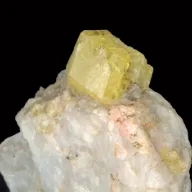 Rhodizite
A caesium borate as hard as topaz, and about as rare as minerals get.
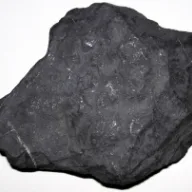 Shungite
Two-billion-year-old carbon rock from Karelia, and a great deal of nonsense.
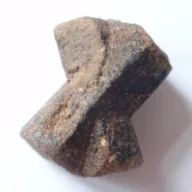 Staurolite
Two crystals grown through each other at sixty degrees, which comes out as a cross.
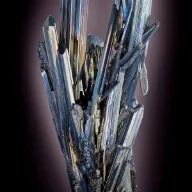 Stibnite
Steel-grey swords in a spray, soft enough to mark with a fingernail, and poisonous.
 Terahertz stone
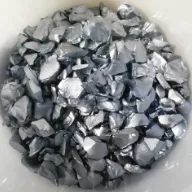
Furnace silicon, cut into beads and sold on a claim about radiation it does not emit.