 Lunarya
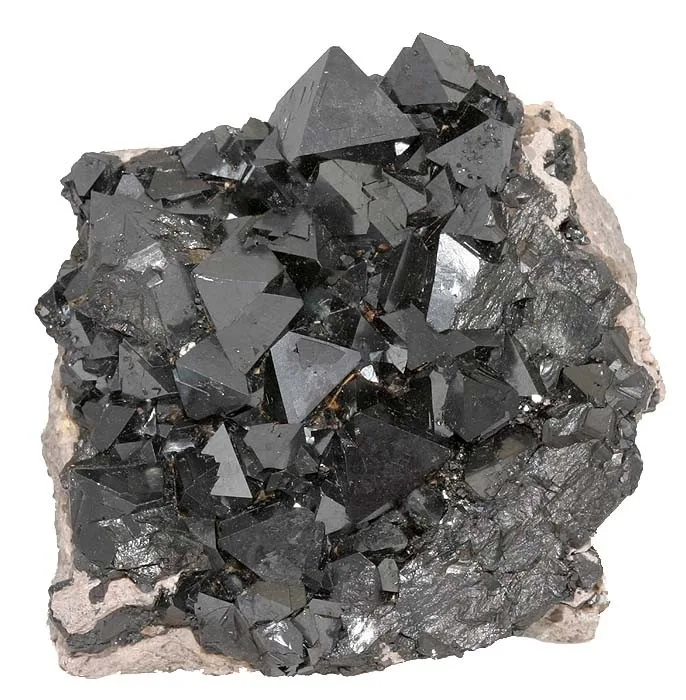
Magnetite
Magnetite is iron oxide, Fe₃O₄, and it is the most strongly magnetic mineral that occurs naturally. It grows in clean black octahedra with a metallic to submetallic lustre, in dodecahedra, and in shapeless masses; the streak is black, the hardness is 5.5 to 6.5, and it is heavy in the hand. Every piece is attracted to a magnet, and some pieces are magnets themselves.
That second kind has a name: lodestone, magnetite that has been permanently magnetised, most likely by a lightning strike, and will pick up iron filings and swing to north when hung on a thread. The magnetism comes from the structure — iron in two oxidation states on two different sites, with their magnetic moments not quite cancelling. Magnetite is also the chief iron ore in some of the world's largest deposits, and it is made biologically: magnetotactic bacteria grow chains of magnetite crystals to orient themselves, and traces occur in the tissues of animals that navigate.
In short
- Colour
- Dark
- Mineral
- Oxide
- Formula
- Fe₃O₄
- Hardness
- 5.5–6.5 on the Mohs scale
- Crystal system
- Cubic
- Found in
- Kiruna in Sweden, the world's largest underground iron mine; Magnet Cove in Arkansas; Brazil, Russia, South Africa, Australia; Traversella and Elba in Italy. In Romania the Banat skarns at Ocna de Fier and Dognecea produced fine crystals and were worked for iron for two centuries.
- Element
- Earth
- Planet
- Mars
- Chakra
- Root
- Handling
- Keep out of water
How it forms
Magnetite crystallises directly from magma, which is why it is a minor constituent of almost every igneous rock, and it concentrates where iron-rich fluid meets limestone in contact skarns. The giant deposits are banded iron formations, laid down on the sea floor more than two billion years ago as the first photosynthetic organisms put oxygen into an ocean full of dissolved iron. Beach sands anywhere downstream of basalt are black with grains of it.
In human hands
The compass is magnetite's story. Chinese diviners used lodestone spoons on bronze plates by the Han dynasty, and a magnetised needle was being used to steer ships by the eleventh century; the knowledge reached Europe by the twelfth. Pliny gives the Greek legend of Magnes the shepherd whose hobnails stuck to a hillside, and the name comes from Magnesia in Asia Minor either way. Iron from magnetite built the industrial world, and Kiruna is still digging it out.
Varieties and trade names
- Lodestone
- Naturally magnetised magnetite; it picks up filings and points north, and it is what the first compasses were.
- Magnetite octahedra
- Sharp black crystals on matrix, from the Alps, Arkansas and the Banat skarns; the collector's form.
- Magnetite sand
- Black beach and river sand, separable with a magnet in seconds; a good afternoon with a child.
- Banded iron formation
- Layered magnetite and chert, over two billion years old, and the source of most of the world's iron.
- Magnetite in meteorites
- The fusion crust of a stony meteorite is partly magnetite, which is why a magnet is a field test for them.
Telling it from a fake
A magnet settles it in a second, and nothing else common responds that strongly. Hematite is attracted only weakly and has a red streak; magnetite's streak is black. Chromite is brown-streaked and barely magnetic. Franklinite is close, but it is only weakly magnetic and comes from one place in New Jersey. If a black octahedron jumps to a magnet, that is magnetite.
None of this needs a laboratory, and none of it is proof. A shop that will not say whether a stone is treated has answered the question; ask, and have the answer written on the receipt.
What it is said to do
Read as the stone of direction and of being pulled to where one ought to be, which is a straight borrowing from the compass. It also carries the trade's grounding language, and magnets have their own long and largely unevidenced history in healing — magnet therapy has been tested repeatedly and does not outperform a placebo, which is worth saying on the page. It is given to Mars, to Aries and Virgo, and to the root.
Living with it
It rusts. Magnetite is iron, and in a humid room a specimen will slowly go brown and dull, so keep it dry and out of the bathroom. A magnetised lodestone will also collect every steel pin and paperclip near it, and it will scramble a mechanical watch or a magnetic card. Sunlight does no harm.
In magic
Lodestone, magnetite with a pull of its own, is the most famous stone in folk magic. In hoodoo a pair of lodestones is fed with magnetic sand and kept in a red bag to draw money, love or luck; in the medieval lapidaries, a lodestone slipped under a sleeping wife's pillow was supposed to reveal whether she had been faithful. Modern practice uses it for attraction and for grounding. It rusts, so it is fed sand, never water.
- Energy
- Receptive
- Day
- Tuesday
- Worked for
- Money and luck · Love and friendship · Grounding and endurance
More of this colour
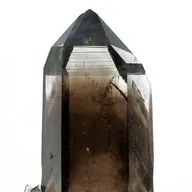 Smoky quartz
Quartz turned brown by the radioactivity of its own bedrock.
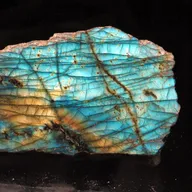 Labradorite
A dull grey stone until you turn it, and then it is peacock blue.
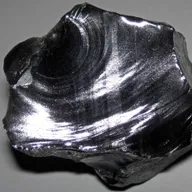 Obsidian
Volcanic glass with an edge finer than a surgical steel blade.
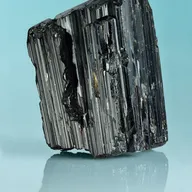 Black tourmaline
The stone that pulls ash out of a pipe when you warm it.
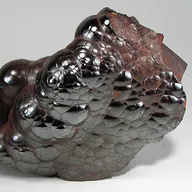 Hematite
Black as a mirror, and it leaves a blood-red line on anything you scratch it against.
Agni manitite
A black glass from Java, sold as a tektite; volcanic, as it turns out.
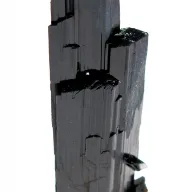 Arfvedsonite
A black amphibole with a blue flash, named for the man who found lithium.
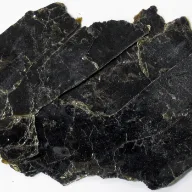 Biotite
Black mica: the flakes in every granite, and sheets big enough to roof a shed.
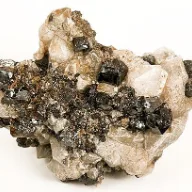 Brookite
Titanium dioxide in its rarest shape: thin red-brown blades grown in Alpine cracks.
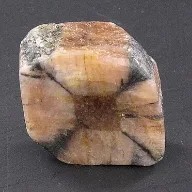 Chiastolite
An andalusite that grows a dark cross inside itself, and was sold for centuries as a Christian charm.
Columbianite
Colombian volcanic glass, sold as a tektite it is not.
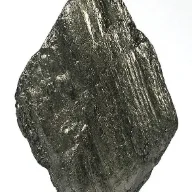 Graphite
Carbon in its soft form: the same element as diamond, stacked in sheets that slide.
 Aegirine
Black pyroxene needles from the strangest rocks on the planet.
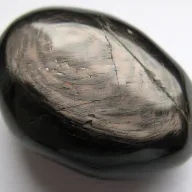 Hypersthene
A bronze-sheened pyroxene whose name the mineralogists retired.
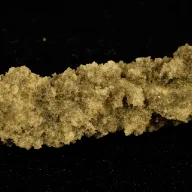 Fulgurite
Sand struck by lightning and fused, in a second, into hollow glass.
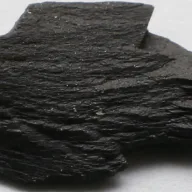 Jet
Fossil driftwood, black and warm in the hand, and Victorian mourning.
Indigo gabbro
A Madagascan rock sold under a wizard name it was given in 2010.
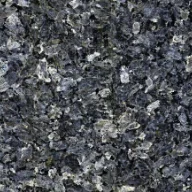 Larvikite
Norway's national rock, and the blue flash on half the shop fronts in Europe.
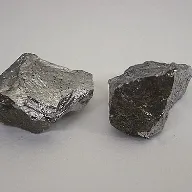 Manganese
The metal that makes steel tough, and that never occurs native.
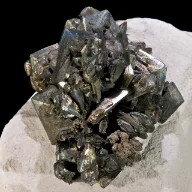 Marcasite
Pyrite's unstable twin, which eats itself in a damp drawer.
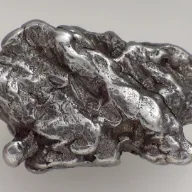 Campo del Cielo
An iron meteorite that fell on the Argentine Chaco four thousand years ago.
 Nuummite
Three-billion-year-old Greenlandic rock that flashes gold and copper.
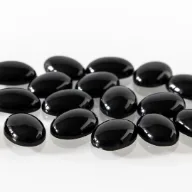 Onyx
Straight-banded chalcedony, and the black stone that is nearly always dyed.
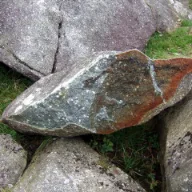 Preseli bluestone
The spotted dolerite of Stonehenge, from a Welsh hillside 250 kilometres away.
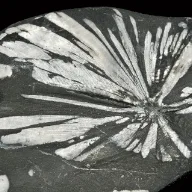 Chrysanthemum stone
Black rock with white mineral flowers that are not fossils.
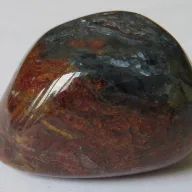 Pietersite
Tiger's eye smashed and cemented back together, so the light swirls.
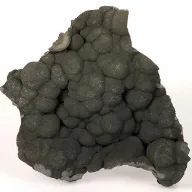 Psilomelane
A field name for the hard black manganese ores, kept alive by lapidaries.
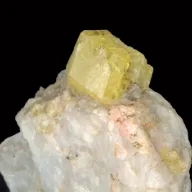 Rhodizite
A caesium borate as hard as topaz, and about as rare as minerals get.
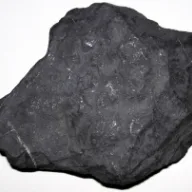 Shungite
Two-billion-year-old carbon rock from Karelia, and a great deal of nonsense.
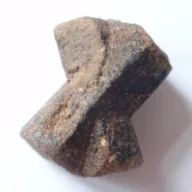 Staurolite
Two crystals grown through each other at sixty degrees, which comes out as a cross.
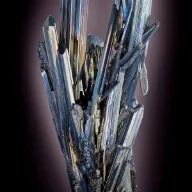 Stibnite
Steel-grey swords in a spray, soft enough to mark with a fingernail, and poisonous.
 Terahertz stone
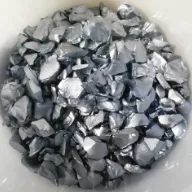
Furnace silicon, cut into beads and sold on a claim about radiation it does not emit.