 Lunarya
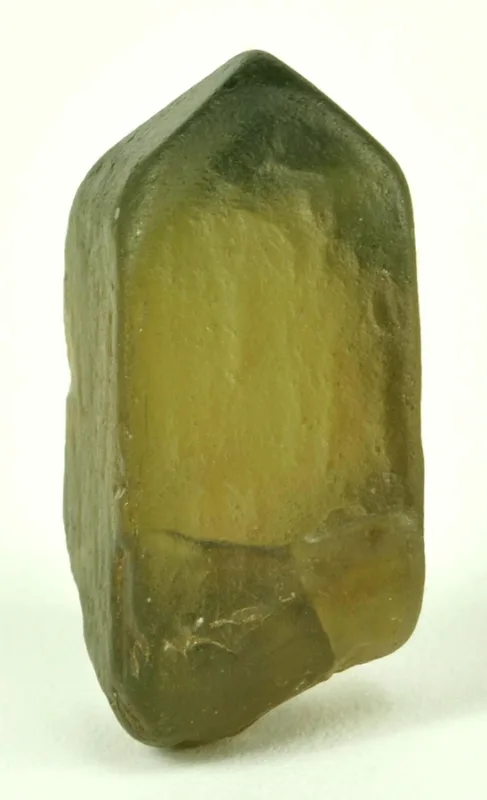
Zircon
Zircon is zirconium silicate, ZrSiO₄, tetragonal, 7.5 on the Mohs scale, and it grows in squat four-sided prisms with pyramidal ends. It occurs in brown, red, orange, yellow, green and colourless, and the bright blue that dominates the shops is heat-treated brown stone from Cambodia and Vietnam. It is one of December's birthstones, and the single most useful mineral in the earth sciences.
Two things make it so. First, it is nearly indestructible: hard, chemically stubborn, and it survives being eroded out of one rock, buried in a sandstone, melted into a granite and eroded again. Second, a crystallising zircon takes up uranium and refuses lead, so any lead found inside it later must have come from uranium decaying in place. That makes every grain a clock. The oldest dated material on earth is a zircon from the Jack Hills of Western Australia at about 4.4 billion years, older than any surviving rock.
In short
- Colour
- Red, orange and gold
- Mineral
- Silicate
- Formula
- ZrSiO₄
- Hardness
- 7.5 on the Mohs scale
- Crystal system
- Tetragonal
- Found in
- Ratanakiri in Cambodia and the Vietnamese highlands for blue and golden gem material; Ratnapura in Sri Lanka; Myanmar; Tanzania; Nigeria; Madagascar; the Langesundsfjord in Norway and the Urals for large crystals; and, as a minor constituent, almost every granite on earth.
- Birthstone of
- December
- Element
- Fire
- Planet
- The Sun
- Chakra
- Root
- Handling
- Fades in sunlight
How it forms
Zircon crystallises early from a cooling granite, which is why it appears as tiny crystals inside other minerals, and it concentrates in pegmatites where there is room to grow large. Because it is dense and tough, rivers sort it into heavy mineral sands alongside rutile and ilmenite, and most gem zircon is recovered from gravels rather than mined. Over hundreds of millions of years the uranium inside a crystal wrecks its own lattice from within, until the crystal is partly glassy, lower in density and greener. Gemmologists call that low zircon, and mineralogists call it metamict.
In human hands
The name comes through Arabic from Persian zargun, gold-coloured. Colourless zircon was the standard diamond substitute for centuries under the names jargon and jargoon, and red-orange zircon is the jacinth or hyacinth of the older lapidaries and of the book of Revelation. Its reputation has been damaged in the last fifty years by a name collision: cubic zirconia, the cheap synthetic that replaced it as a diamond imitation, is zirconium dioxide grown in a furnace and is not zircon, not a mineral and not related to it beyond sharing an element. Blue zircon, which made the stone popular again, is a treatment from the 1920s.
Varieties and trade names
- Blue zircon
- Brown Cambodian zircon heated to about 900 degrees without air. The colour is stable in normal wear but can pale in strong sunlight, and it is a treatment, not a natural colour.
- Jacinth
- Red to orange-brown zircon, the oldest named variety and the one the historical references are about.
- Low zircon
- Metamict material, green or olive, its structure broken up by its own radioactivity over geological time. Softer, lighter, and interesting for exactly that reason.
- Colourless zircon
- Sold as jargon or matura diamond; with its high dispersion it does look the part, and it wore its way around European jewellery for three hundred years before cubic zirconia arrived.
- Cubic zirconia
- Not zircon. A synthetic zirconium oxide, first grown in the 1970s, cheap and everywhere. The names are close enough that shops confuse them, sometimes honestly.
Telling it from a fake
Zircon's birefringence is strong enough to see with a loupe: look through the table of a cut stone and the back facet edges appear doubled, which diamond never does and cubic zirconia does not either. It is very dense — a zircon feels distinctly heavy for its size — and it has a hard, near-adamantine lustre. Facet edges wear and chip with time, so an old zircon often looks slightly soft at the corners. Blue of that particular electric shade, in quantity and cheap, is heat-treated zircon or topaz, not sapphire.
None of this needs a laboratory, and none of it is proof. A shop that will not say whether a stone is treated has answered the question; ask, and have the answer written on the receipt.
What it is said to do
Zircon has a long tradition under the name hyacinth, which the medieval lapidaries gave to travellers for safety and to the sleepless for rest. The modern reading leans on the geology: duration, memory, the very long view, and a certain steadiness. It goes with fire, with the Sun, with Sagittarius and Leo, and with the root centre. It is one of the few cases where the old attributions and the modern ones do not contradict each other, both of them circling the idea of something that lasts.
Living with it
Hard but brittle: zircon abrades at the facet edges more than its hardness suggests, so ring stones should be set with protection and kept out of a jewellery box with harder gems. Keep it out of strong sunlight, which can pale heat-treated blue and brown stones over time, and away from steam and ultrasonic cleaners. Warm soapy water is enough. Zircon contains traces of uranium and thorium; the radioactivity of a gem-sized stone is negligible and it is safe to wear, but it is a reason not to grind or powder it.
In magic
Under its old name, hyacinth, zircon had a real place in medieval magic: it was worn on journeys for safety and a welcome at the inn, and kept by the bed for sleep. Modern practice keeps both, and adds it to protection bags for travel and to night-time workings for rest. Keep a blue or brown one out of strong sunlight, which can pale it.
- Energy
- Projective
- Day
- Sunday
- Worked for
- Protection · Sleep and dreams
More of this colour
 Garnet
Not one mineral but a whole family, and half of it ends up as sandpaper.
 Carnelian
Orange chalcedony, and the stone hot wax will not stick to.
 Citrine
Yellow quartz, except that most of it is amethyst that has been in an oven.
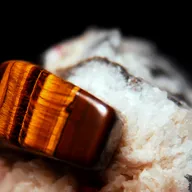 Tiger's eye
A stripe of light that slides across the stone when you tilt it.
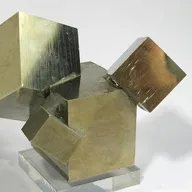 Pyrite
Fool's gold, in cubes so sharp they look machined.
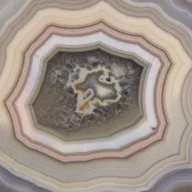 Agate
Chalcedony laid down in bands, one over the next, inside a bubble in old lava.
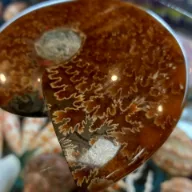 Ammonite
A shell that spiralled through the seas for three hundred million years, turned to stone.
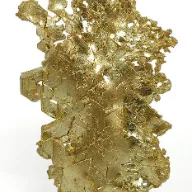 Gold
The one metal that comes out of the ground already finished.
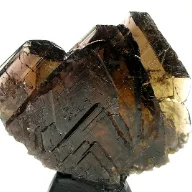 Axinite
Clove-brown wedges of a boron silicate, sharp enough to be named for an axe.
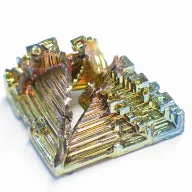 Bismuth
A metal that grows in rainbow staircases — in a saucepan, mostly.
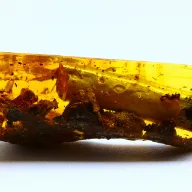 Amber
Not a stone at all: tree resin that leaked out forty million years ago and went hard.
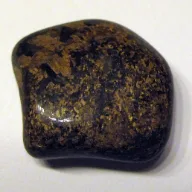 Bronzite
A dark pyroxene with a bronze sheen, from the same family the meteorites are full of.
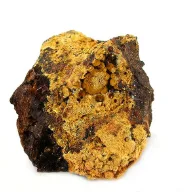 Cacoxenite
Golden needles in iron ore, named the bad guest because they ruined the smelt.
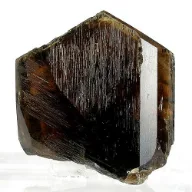 Chrysoberyl
The third hardest gem there is, no relation to beryl, and the only true cat's eye.
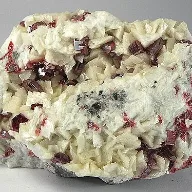 Cinnabar
Mercury ore, the red of every Chinese seal, and the most dangerous mineral in the cabinet.
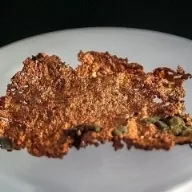 Copper
The first metal anyone ever worked, and one of the few that turns up ready to use.
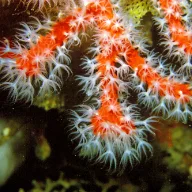 Red coral
The skeleton of a slow-growing animal, worn as a gem for five thousand years.
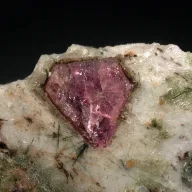 Eudialyte
Raspberry grains in grey Arctic rock, named for dissolving easily.
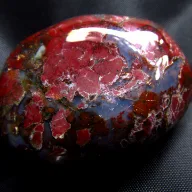 Jasper
Opaque chalcedony, stained by whatever the sediment happened to hold.
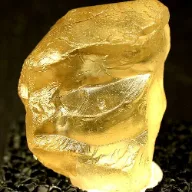 Golden labradorite
Bytownite: a calcium feldspar that cuts into clear champagne gold.
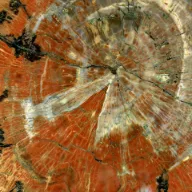 Petrified wood
A tree that became quartz cell by cell, and kept its grain.
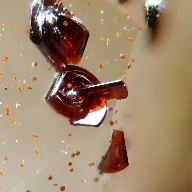 Lepidocrocite
The red half of rust, and the red flecks inside amethyst.
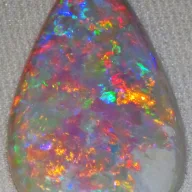 Opal
Water and silica in tiny stacked spheres, splitting light into colour.
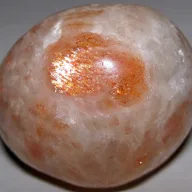 Sunstone
Feldspar full of metal flakes, throwing back the light in orange sparks.
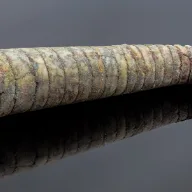 Orthoceras
A straight-shelled squid relative that died four hundred million years ago.
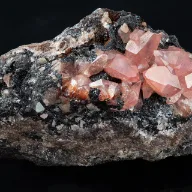 Rhodochrosite
Manganese carbonate in rose red, banded in caves and crystallised in mines.
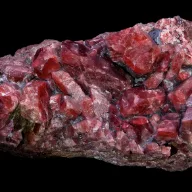 Rhodonite
Pink manganese silicate veined with the black oxide it turns into.
 Ruby
Corundum with chromium in it, and for centuries the most expensive stone on earth.
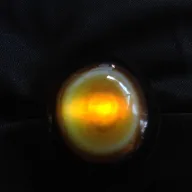 Sardonyx
Red-brown and white in straight bands, and the Roman world's seal stone.
 Scheelite
The tungsten ore that glows electric blue under a lamp in the dark.
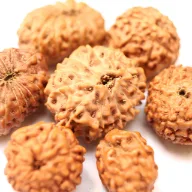 Rudraksha
The stone of a fruit, not of the ground, and the oldest prayer bead in India.
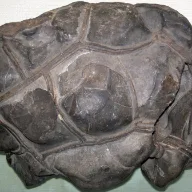 Septarian
A mud nodule that cracked from the inside and filled its own cracks with calcite.
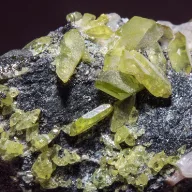 Sphene
Titanite, which throws more fire than a diamond and is far too soft to wear.
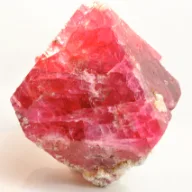 Spinel
Eight hundred years of crown jewels called it a ruby.
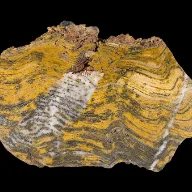 Stromatolite
Three and a half billion years of bacterial mats, turned to stone in layers.
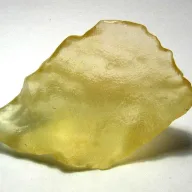 Libyan desert glass
Pale yellow glass lying loose in the Sahara, and a scarab in Tutankhamun's tomb cut from it.
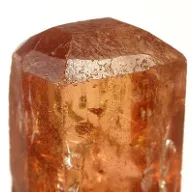 Topaz
Eight on the Mohs scale by definition, and it splits like slate if you hit it right.
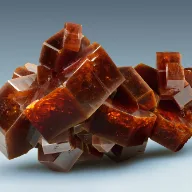 Vanadinite
Hexagonal barrels of orange-red lead vanadate, and the mineral vanadium was found in.