 Lunarya
Gold
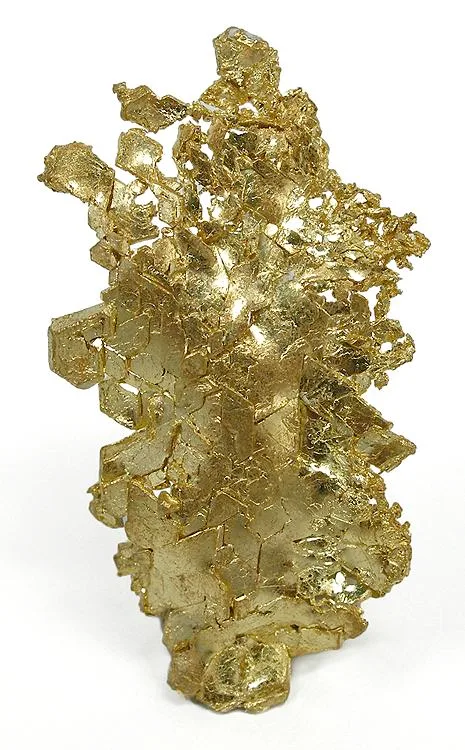
Gold is found as gold: the pure metal, in grains, nuggets, leaves and wires, and now and then in crystals — octahedra and branching trees of them — because it reacts with almost nothing and stays what it was when the rock around it has rotted away. It is soft enough to cut with a knife and dense enough that a fist of it weighs as much as a bag of sugar.
It has been the measure of everything for six thousand years without ever being much use for anything, and the reason is the same chemistry: it does not tarnish, so a coin from a wreck comes up as bright as it went down. The great nuggets — the Welcome Stranger, seventy-two kilograms, found three centimetres under the roots of a tree in Victoria in 1869 — are alluvial, worn out of veins and rolled downstream; the crystals come from the veins themselves, and the finest of them, from the Eagle's Nest mine in California and the Round Mountain mine in Nevada, are worth many times their weight in bullion. Roșia Montană in the Apuseni mountains, mined since the Romans, gave Europe some of the best.
In short
- Colour
- Red, orange and gold
- Mineral
- Native element
- Formula
- Au
- Hardness
- 2.5–3 on the Mohs scale
- Crystal system
- Cubic
- Found in
- South Africa, Nevada, California, Australia (Victoria), Russia, Romania (Roșia Montană), and in nearly every river that drains an old mountain range.
- Element
- Fire
- Planet
- The Sun
- Chakra
- Solar plexus
- Handling
- Water and light are both fine
How it forms
Gold is carried in hot water through the crust in tiny amounts, and comes out of it as metal where the water cools, boils or meets sulfur: in quartz veins, mostly, threaded through old mountain roots, with pyrite and arsenopyrite beside it. The famous specimens are those veins' open pockets, where the metal had room to grow into leaves and crystals rather than being locked in quartz. Then erosion takes over. The vein weathers, the gold — heavy and indestructible — settles to the bed of the stream that drains it, and rolls downhill into the placers that every gold rush began on. The Witwatersrand, the largest deposit there is, is an ancient placer that turned to stone.
In human hands
Gold is in the graves of Varna in Bulgaria from 4500 BC, the oldest worked gold known; it was coinage by the seventh century BC in Lydia, the standard of money from Rome to 1971, and the reason for the rushes that peopled California in 1849, Victoria in 1851 and the Klondike in 1896. Dacia's gold, from the Apuseni mountains, was the prize Trajan took in AD 106 and is on his column; the same hills were worked until 2006 and the fight over reopening them has run since. Nearly all the gold ever mined — perhaps two hundred thousand tonnes, a cube twenty metres on a side — still exists, because none of it has gone anywhere.
Varieties and trade names
- Nuggets
- Gold rolled out of a vein by a river, rounded and pitted; the form of every gold rush, and of every gold pan.
- Crystallised gold
- Octahedra, leaves and branching trees grown in the open pocket of a vein; rare, and worth far more than the metal in them.
- Gold in quartz
- Wire and leaf gold still in the white quartz it grew in, the mine's own picture of where the metal comes from.
- Electrum
- Gold with a good part of silver in it, paler and naturally so; the metal of the first coins.
Telling it from a fake
Gold is soft, heavy and bright: a knife point dents it, it does not flake, it is yellow in shadow as well as in sun, and a piece the size of a pea weighs more than seems right. Pyrite — fool's gold — is brassy rather than yellow, brittle, cubic in its crystals, and it scratches the knife instead. Chalcopyrite is brassier and softer than pyrite and tarnishes to peacock colours. Flakes of mica in a stream glitter and weigh nothing. Specimens of crystallised gold have been faked by casting and by gluing real gold to quartz; a real one is priced accordingly and comes with its mine's name.
None of this needs a laboratory, and none of it is proof. A shop that will not say whether a stone is treated has answered the question; ask, and have the answer written on the receipt.
What it is said to do
The sun's metal in every system that had one: the tradition gives it warmth, confidence, generosity and the kind of worth that does not need a market, and the alchemists made it the end of their work, the thing every base metal wanted to become. It is given for vitality and for the courage to be seen, and, in the older readings, for the heart.
Living with it
It needs nothing. Gold does not tarnish, dissolve or fade; a specimen wants only to be kept from being scratched by the things around it, since it is the softest thing in the box.
In magic
Gold is the Sun's metal in alchemy and in planetary magic, and every solar working wants a little of it: a gold ring worn for a Sunday spell for success, a gold coin in a prosperity bag, gold leaf on a talisman made when the Sun is strong. The spellbooks also use it for confidence, on the reasoning that the Sun is the planet of being seen. Water, salt and fire leave it as it was, which makes it the one material here a ritual cannot harm.
- Energy
- Projective
- Day
- Sunday
- Worked for
- Money and luck · Courage and drive
More of this colour
 Garnet
Not one mineral but a whole family, and half of it ends up as sandpaper.
 Carnelian
Orange chalcedony, and the stone hot wax will not stick to.
 Citrine
Yellow quartz, except that most of it is amethyst that has been in an oven.
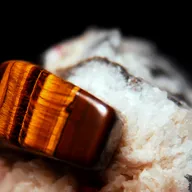 Tiger's eye
A stripe of light that slides across the stone when you tilt it.
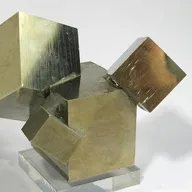 Pyrite
Fool's gold, in cubes so sharp they look machined.
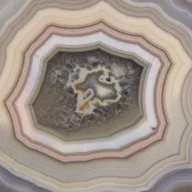 Agate
Chalcedony laid down in bands, one over the next, inside a bubble in old lava.
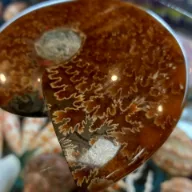 Ammonite
A shell that spiralled through the seas for three hundred million years, turned to stone.
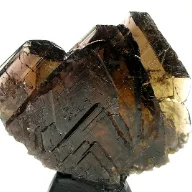 Axinite
Clove-brown wedges of a boron silicate, sharp enough to be named for an axe.
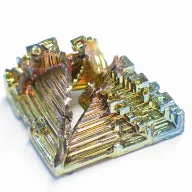 Bismuth
A metal that grows in rainbow staircases — in a saucepan, mostly.
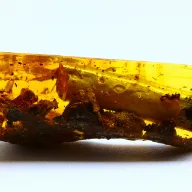 Amber
Not a stone at all: tree resin that leaked out forty million years ago and went hard.
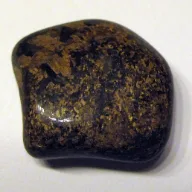 Bronzite
A dark pyroxene with a bronze sheen, from the same family the meteorites are full of.
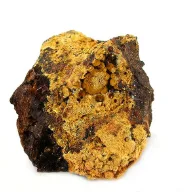 Cacoxenite
Golden needles in iron ore, named the bad guest because they ruined the smelt.
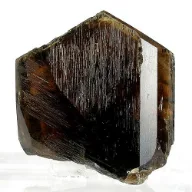 Chrysoberyl
The third hardest gem there is, no relation to beryl, and the only true cat's eye.
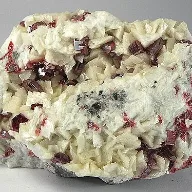 Cinnabar
Mercury ore, the red of every Chinese seal, and the most dangerous mineral in the cabinet.
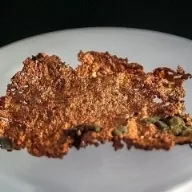 Copper
The first metal anyone ever worked, and one of the few that turns up ready to use.
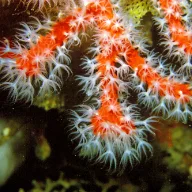 Red coral
The skeleton of a slow-growing animal, worn as a gem for five thousand years.
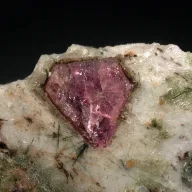 Eudialyte
Raspberry grains in grey Arctic rock, named for dissolving easily.
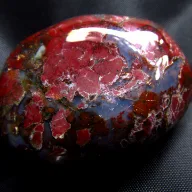 Jasper
Opaque chalcedony, stained by whatever the sediment happened to hold.
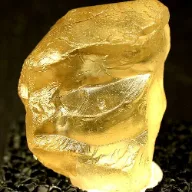 Golden labradorite
Bytownite: a calcium feldspar that cuts into clear champagne gold.
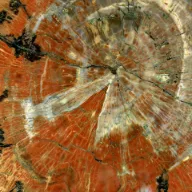 Petrified wood
A tree that became quartz cell by cell, and kept its grain.
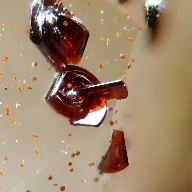 Lepidocrocite
The red half of rust, and the red flecks inside amethyst.
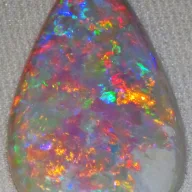 Opal
Water and silica in tiny stacked spheres, splitting light into colour.
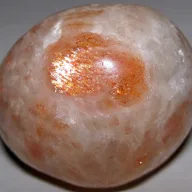 Sunstone
Feldspar full of metal flakes, throwing back the light in orange sparks.
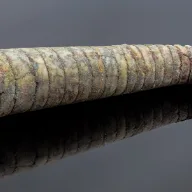 Orthoceras
A straight-shelled squid relative that died four hundred million years ago.
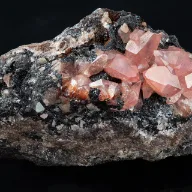 Rhodochrosite
Manganese carbonate in rose red, banded in caves and crystallised in mines.
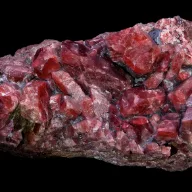 Rhodonite
Pink manganese silicate veined with the black oxide it turns into.
 Ruby
Corundum with chromium in it, and for centuries the most expensive stone on earth.
 Sardonyx
Red-brown and white in straight bands, and the Roman world's seal stone.
 Scheelite
The tungsten ore that glows electric blue under a lamp in the dark.
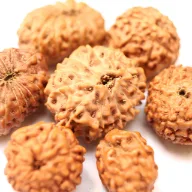 Rudraksha
The stone of a fruit, not of the ground, and the oldest prayer bead in India.
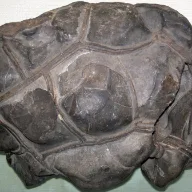 Septarian
A mud nodule that cracked from the inside and filled its own cracks with calcite.
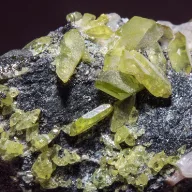 Sphene
Titanite, which throws more fire than a diamond and is far too soft to wear.
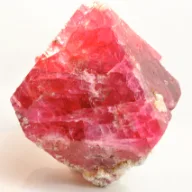 Spinel
Eight hundred years of crown jewels called it a ruby.
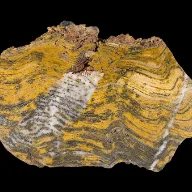 Stromatolite
Three and a half billion years of bacterial mats, turned to stone in layers.
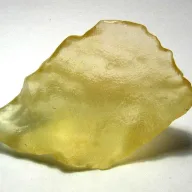 Libyan desert glass
Pale yellow glass lying loose in the Sahara, and a scarab in Tutankhamun's tomb cut from it.
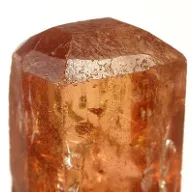 Topaz
Eight on the Mohs scale by definition, and it splits like slate if you hit it right.
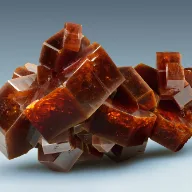 Vanadinite
Hexagonal barrels of orange-red lead vanadate, and the mineral vanadium was found in.
 Zircon
The oldest thing on earth is a grain of it, and no, it is not cubic zirconia.