 Lunarya
Copper
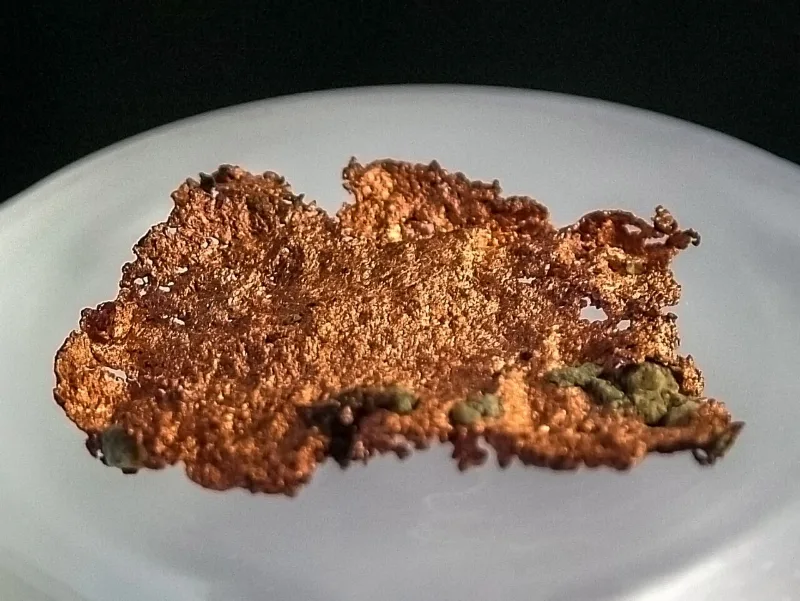
Copper is a native element: the metal itself, growing in rock as wires, plates, branching dendrites and, rarely, as cubic crystals. It is soft, heavy, and so malleable that a lump can be hammered flat rather than broken, which is why it was the first metal people used. Fresh surfaces are salmon pink and darken within hours to the familiar orange-brown; given years and damp air, they go green.
Only copper, gold and silver are commonly found as metal in nature, and copper is the one that occurs in quantity. The Keweenaw Peninsula in Michigan holds the largest native copper deposit on Earth, and Indigenous people mined it there from about five thousand years ago, hammering and annealing the metal into tools that were traded across the continent. The Ontonagon Boulder, a ton and a half of pure copper, sat in a riverbed there and ended up in the Smithsonian after a long argument about who owned it.
In short
- Colour
- Red, orange and gold
- Mineral
- Native element
- Formula
- Cu
- Hardness
- 3 on the Mohs scale
- Crystal system
- Cubic
- Found in
- The Keweenaw Peninsula in Michigan, Bisbee and Ray in Arizona, Chile, Cornwall, the Urals, Namibia and the Democratic Republic of Congo.
- Element
- Fire
- Planet
- Venus
- Chakra
- Sacral
- Handling
- Keep out of water
How it forms
Native copper needs a chemical trap: a fluid carrying copper in solution, and something to take the oxygen out of it. At Keweenaw a stack of billion-year-old basalt lavas was flushed with hot brines, and the iron minerals in the basalt did the reducing, so metallic copper filled the gas bubbles and the fractures over hundreds of thousands of years. Elsewhere it forms in the cementation zone of a copper deposit, just below the water table, where descending oxidised solutions meet fresh sulfides. In both cases it grows as a skeleton — branches and wires and plates — rather than as neat crystals.
In human hands
The oldest worked copper is about ten thousand years old, from Anatolia; Ötzi, who died in the Alps five thousand three hundred years ago, carried an axe of almost pure copper. Alloyed with tin it becomes bronze and gives a whole age its name. Cyprus supplied Rome and gave the metal its name, aes cyprium. Alchemy assigned it to Venus and used her mirror as its symbol, which is why the same sign now means female in biology. Since the 1880s copper has mattered most as wire: the grid, the motor and the telephone all run on it.
Varieties and trade names
- Crystallised copper
- Cubes, octahedra and distorted crystals, the collector's prize; fine ones come from Michigan, Arizona and Russia.
- Wire and dendritic copper
- Branching skeletal growths that look like a plant; most native copper has this habit.
- Half-breed
- Copper and silver grown together in one mass without alloying, a Keweenaw speciality and a geological oddity.
- Float copper
- Masses torn out of the Michigan bedrock by glaciers and dropped across the Midwest; some weigh tonnes.
- Copper in calcite
- Fine dendrites suspended in clear calcite crystals, sold as slices; the classic display piece.
Telling it from a fake
Scratch a clean corner: copper is metal under the crust, bends rather than snaps, and is heavy for its size. Its streak is copper-red. Green patina is malachite or brochantite forming in place and confirms rather than contradicts it. What is sold as "copper" in crystal shops is often manufactured metal — cast or electroformed — which is a fine thing to own but is not a mineral specimen; natural pieces have rock attached and irregular, crusty surfaces.
None of this needs a laboratory, and none of it is proof. A shop that will not say whether a stone is treated has answered the question; ask, and have the answer written on the receipt.
What it is said to do
Venus's metal, given for warmth, attraction and connection, and treated in the crystal literature as a conductor that amplifies whatever it is paired with. Copper bracelets for joint pain are an old and widespread custom; trials have not found a benefit beyond placebo, and the green mark they leave on the skin is simply copper salts formed with sweat, which is harmless. As a piece of folklore it is charming; as a treatment it is not one.
Living with it
Keep it dry. Copper tarnishes to brown and then green in damp air, which some collectors like and others fight with lemon juice and salt, or a proprietary polish; a coat of microcrystalline wax after cleaning slows it down. Do not put a specimen in water or a salt bath, and do not handle it more than you must, since fingerprints etch in.
In magic
Copper is Venus's metal in planetary magic — after Cyprus, where it was mined and where the goddess came ashore — and it serves in love and friendship workings: copper wire wound round a pink candle on a Friday, copper coins in a sachet. Modern witches also make wands with copper coils on the reasoning that it conducts, which is true of electricity and a metaphor for everything else.
- Energy
- Projective
- Day
- Friday
- Worked for
- Love and friendship
More of this colour
 Garnet
Not one mineral but a whole family, and half of it ends up as sandpaper.
 Carnelian
Orange chalcedony, and the stone hot wax will not stick to.
 Citrine
Yellow quartz, except that most of it is amethyst that has been in an oven.
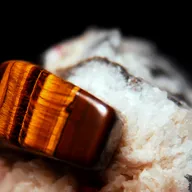 Tiger's eye
A stripe of light that slides across the stone when you tilt it.
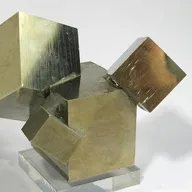 Pyrite
Fool's gold, in cubes so sharp they look machined.
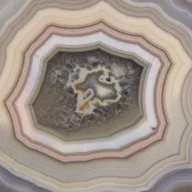 Agate
Chalcedony laid down in bands, one over the next, inside a bubble in old lava.
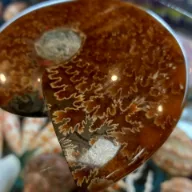 Ammonite
A shell that spiralled through the seas for three hundred million years, turned to stone.
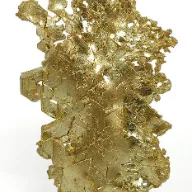 Gold
The one metal that comes out of the ground already finished.
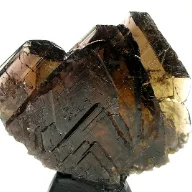 Axinite
Clove-brown wedges of a boron silicate, sharp enough to be named for an axe.
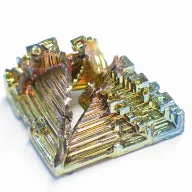 Bismuth
A metal that grows in rainbow staircases — in a saucepan, mostly.
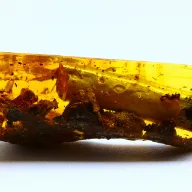 Amber
Not a stone at all: tree resin that leaked out forty million years ago and went hard.
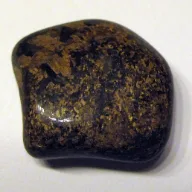 Bronzite
A dark pyroxene with a bronze sheen, from the same family the meteorites are full of.
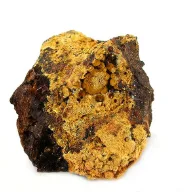 Cacoxenite
Golden needles in iron ore, named the bad guest because they ruined the smelt.
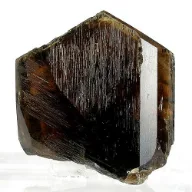 Chrysoberyl
The third hardest gem there is, no relation to beryl, and the only true cat's eye.
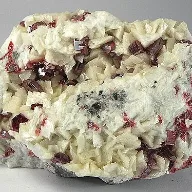 Cinnabar
Mercury ore, the red of every Chinese seal, and the most dangerous mineral in the cabinet.
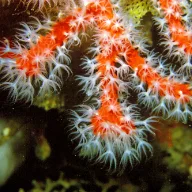 Red coral
The skeleton of a slow-growing animal, worn as a gem for five thousand years.
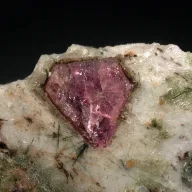 Eudialyte
Raspberry grains in grey Arctic rock, named for dissolving easily.
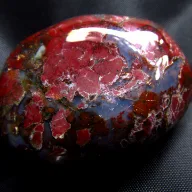 Jasper
Opaque chalcedony, stained by whatever the sediment happened to hold.
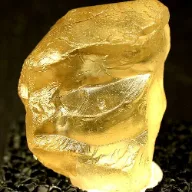 Golden labradorite
Bytownite: a calcium feldspar that cuts into clear champagne gold.
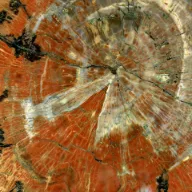 Petrified wood
A tree that became quartz cell by cell, and kept its grain.
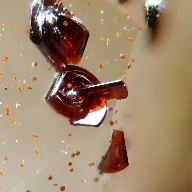 Lepidocrocite
The red half of rust, and the red flecks inside amethyst.
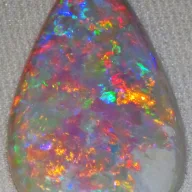 Opal
Water and silica in tiny stacked spheres, splitting light into colour.
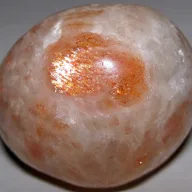 Sunstone
Feldspar full of metal flakes, throwing back the light in orange sparks.
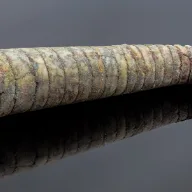 Orthoceras
A straight-shelled squid relative that died four hundred million years ago.
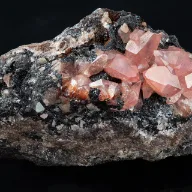 Rhodochrosite
Manganese carbonate in rose red, banded in caves and crystallised in mines.
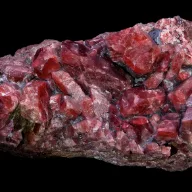 Rhodonite
Pink manganese silicate veined with the black oxide it turns into.
 Ruby
Corundum with chromium in it, and for centuries the most expensive stone on earth.
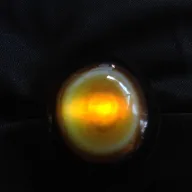 Sardonyx
Red-brown and white in straight bands, and the Roman world's seal stone.
 Scheelite
The tungsten ore that glows electric blue under a lamp in the dark.
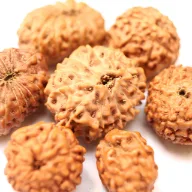 Rudraksha
The stone of a fruit, not of the ground, and the oldest prayer bead in India.
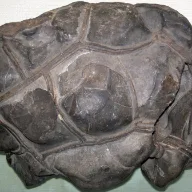 Septarian
A mud nodule that cracked from the inside and filled its own cracks with calcite.
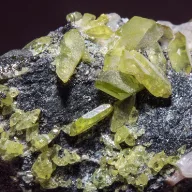 Sphene
Titanite, which throws more fire than a diamond and is far too soft to wear.
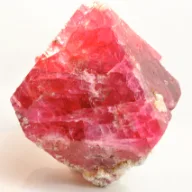 Spinel
Eight hundred years of crown jewels called it a ruby.
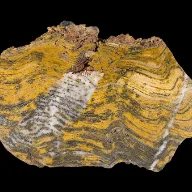 Stromatolite
Three and a half billion years of bacterial mats, turned to stone in layers.
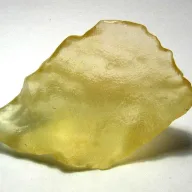 Libyan desert glass
Pale yellow glass lying loose in the Sahara, and a scarab in Tutankhamun's tomb cut from it.
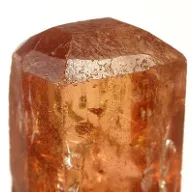 Topaz
Eight on the Mohs scale by definition, and it splits like slate if you hit it right.
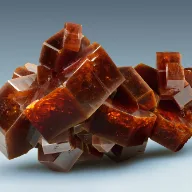 Vanadinite
Hexagonal barrels of orange-red lead vanadate, and the mineral vanadium was found in.
 Zircon
The oldest thing on earth is a grain of it, and no, it is not cubic zirconia.