 Lunarya
Venus
Venus is the taste and the tenderness of a chart. It covers attraction, affection, money, art and manners: not who you want so much as how you want, what you find worth having, and how generous or careful you are once you have it.
It rules Taurus, the pleasure of keeping something good, and Libra, the pleasure of getting something right between two people. In a chart it shows the style of somebody's affection, which is why mismatched Venuses can love each other sincerely and still feel unloved.
What it rules
- Group
- Personal planets
- Day
- Friday
- One turn of the zodiac
- about 1 year
- Time in one sign
- about 4 weeks
In a chart
Read Venus for how someone loves and what they consider valuable.
What it rules
Venus in stone
The stones the lists give to Venus. This is tradition rather than mineralogy, and each stone's own page keeps the two apart.
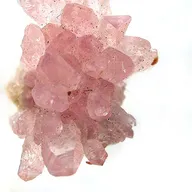 Rose quartz
The pink one, given away more often than it is bought.
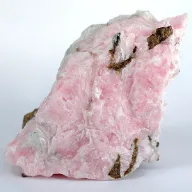 Bustamite
A pale pink manganese silicate from the world's strangest ore bodies, and rhodonite's quieter cousin.
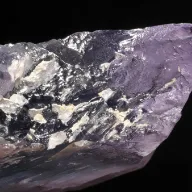 Spodumene
The lithium ore that turns up as pink gem crystals the length of a man.
 Tourmaline
Thirty-odd minerals sharing one crystal shape, and every colour there is.
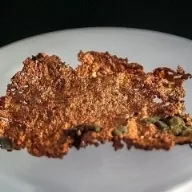 Copper
The first metal anyone ever worked, and one of the few that turns up ready to use.
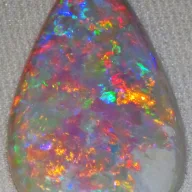 Opal
Water and silica in tiny stacked spheres, splitting light into colour.
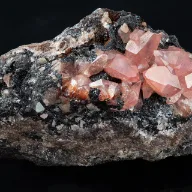 Rhodochrosite
Manganese carbonate in rose red, banded in caves and crystallised in mines.
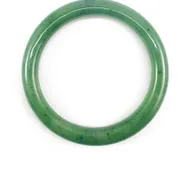 Jade
Two different minerals under one name, and the toughest stone on this page.
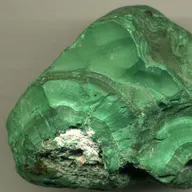 Malachite
Copper gone green, in bands you can read like tree rings.
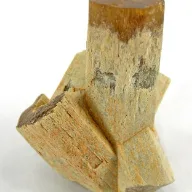 Beryl
One mineral, six famous names: emerald, aquamarine, morganite and the rest are all this.
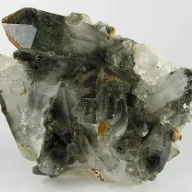 Chlorite
The green that gets into everything: a whole family of soft micaceous minerals, and the ghost inside phantom quartz.
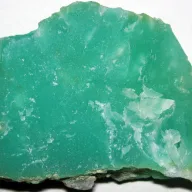 Chrysoprase
Apple-green chalcedony coloured by nickel, and the most valuable of all the quartzes.
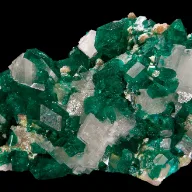 Dioptase
Copper green so convincing that the first crystals sent to Moscow were reported as emeralds.
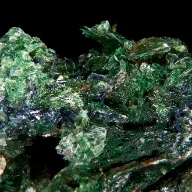 Fuchsite
Muscovite that took up chromium and turned green and glittering.
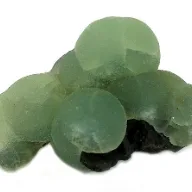 Prehnite
Green botryoidal crusts, usually with black epidote needles through them.
Saussurite
What a feldspar becomes when hot water gets at it for long enough.
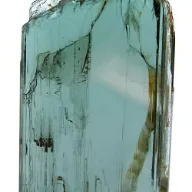 Zoisite
A grey-green rock mineral that produced two of the century's fashionable gems.
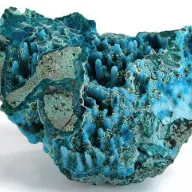 Chrysocolla
Copper turned to blue-green paste, and the flux that Bronze Age goldsmiths soldered with.
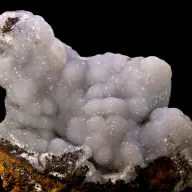 Smithsonite
Zinc carbonate in botryoidal crusts, named after the man who founded the Smithsonian.
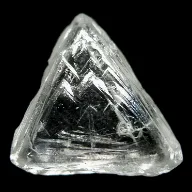 Diamond
Carbon, arranged the hard way, and carried up from two hundred kilometres down.
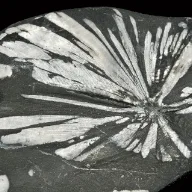 Chrysanthemum stone
Black rock with white mineral flowers that are not fossils.