 Lunarya
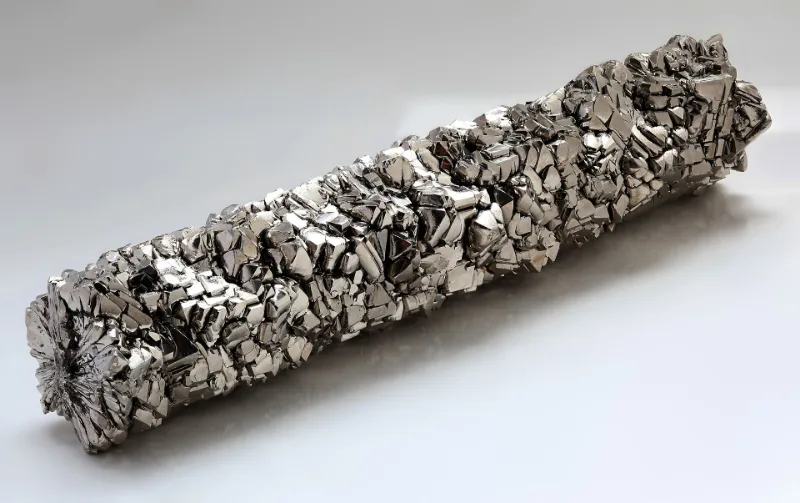
Titanium
Titanium is an element, number 22, and it is not rare — it is the ninth most abundant element in the earth's crust, ahead of carbon and chlorine. What is rare is finding it as a metal. Native titanium has been reported a handful of times in odd environments and never in a quantity anybody could use. Every piece of titanium in the world was made in a furnace, and the shiny grey crystal bars sold as specimens are laboratory products, not minerals.
The metal is 6 on the Mohs scale, about 60 per cent as dense as steel and as strong as many steels, which is the property everything else follows from. It also grows an oxide skin instantly on contact with air, a few atoms thick, which is why it does not corrode in seawater, in bleach or in the human body — titanium is the standard material for bone screws and joint replacements. That same oxide layer, thickened electrically, produces the blues, purples and golds of anodised titanium jewellery: the colour is interference in a transparent film, not a pigment, and there is no dye anywhere in it.
In short
- Colour
- Clear and white
- Mineral
- Native element
- Formula
- Ti
- Hardness
- 6 on the Mohs scale
- Crystal system
- Hexagonal
- Found in
- As an element, in rock everywhere. As ore, in ilmenite and rutile sands: Australia, South Africa, Mozambique, Kenya, China, Canada and Norway. As metal, from smelters in China, Japan, Russia, Kazakhstan and the United States.
- Element
- Fire
- Planet
- Mars
- Chakra
- Solar plexus
- Handling
- Water and light are both fine
How it forms
Titanium sits in the crystal structures of ordinary rock-forming minerals and concentrates into ilmenite and rutile as magmas cool. Those two are heavy and durable, so rivers and waves sort them out of weathered rock into black sand beaches, which is where most of the world's supply is dug. Extracting the metal is genuinely hard: the Kroll process converts the ore to titanium tetrachloride, reduces it with molten magnesium under argon, and yields a porous sponge that then has to be melted in a vacuum. That difficulty, not scarcity, is why titanium costs what it does.
In human hands
William Gregor, a Cornish clergyman, found a black magnetic sand in the Manaccan valley in 1791 and reported an unknown metal in it. Klaproth identified the same element in rutile in 1795 and named it for the Titans. Nobody made it pure until Matthew Hunter in 1910, and nobody made it in quantity until William Kroll's process of 1940 and the aerospace programmes that followed. Well over nine-tenths of all titanium mined never becomes metal at all — it becomes titanium dioxide, the white pigment in paint, paper, sunscreen and toothpaste.
Varieties and trade names
- Crystal bar
- Pure dendritic titanium grown by the van Arkel–de Boer iodide process onto a hot wire. These faceted silver bars are the specimens usually sold, and they are laboratory-grown.
- Anodised titanium
- Coloured by an oxide film grown in an electrolytic bath; the thicker the film, the further round the spectrum. The colour is structural and will not fade, though it wears through at a rubbing edge.
- Titanium aura quartz
- Quartz with titanium and niobium fused onto it in a vacuum chamber. It is quartz with a metal skin, made since the 1980s, and it should be sold as such — it often is not.
- Rutile
- Titanium dioxide, a genuine mineral and a real ore; the golden needles inside rutilated quartz are this.
- Ilmenite
- Iron titanium oxide, black and weakly magnetic; the black sand Gregor was looking at, and the main source of the world's titanium.
Telling it from a fake
Weight settles it. Titanium is noticeably light for a metal — pick up a titanium ring after a steel one and the difference is unmistakable — and it is non-magnetic, where most grey structural metals are not. It does not tarnish. An anodised piece shows colour that shifts slightly with the viewing angle and is worn away rather than scratched off. Aura quartz is quartz: hard, transparent underneath, with an oily iridescent sheen on the surface and often bare patches where handling has removed the coating.
None of this needs a laboratory, and none of it is proof. A shop that will not say whether a stone is treated has answered the question; ask, and have the answer written on the receipt.
What it is said to do
Titanium is given strength and resilience of the specific kind it actually has — light rather than heavy, flexible rather than rigid, and unaffected by things that corrode everything around it. It goes with fire, with Mars, with Aries and Aquarius, and with the solar plexus. This is a modern assignment for a modern material, and the honest version of it is that the metal earns the reading: a titanium plate holding a bone together is doing, literally, what the tradition claims for it.
Living with it
Nothing damages it in ordinary use. Water, salt water, soap, sweat and sunlight are all irrelevant; titanium does not rust, tarnish or fade, and it is hypoallergenic, which is why it is used for piercings and implants. Anodised colour is the one vulnerable part: abrasive polish will take it straight off, so clean coloured pieces with soap and a cloth only. Aura quartz needs the same care, since its coating is thinner than the anodising.
In magic
Titanium has no older magic. Modern practice uses the metal, and aura quartz coated with it, for strength and resilience: a titanium ring for a working of endurance, a coated crystal for courage. As an image of what holds without rusting it is a fair one, and nothing in a ritual can hurt it.
- Energy
- Projective
- Day
- Tuesday
- Worked for
- Courage and drive · Protection
More of this colour
 Clear quartz
The plain one, and the one the modern world actually runs on.
 Selenite
Gypsum in satin fibres, soft enough to mark with a fingernail.
 Moonstone
Feldspar with a light inside it that moves when the stone does.
 Amblygonite
A lithium phosphate from the pegmatites, and the palest yellow gem you have never heard of.
 Silver
The metal of the moon, grown in wires and ferns in the veins of the earth.
 Baryte
The heavy stone: barium sulfate, and the reason a rose can grow in the desert.
 Calcite
The commonest carbonate on Earth, and the crystal that showed physicists light has two paths.
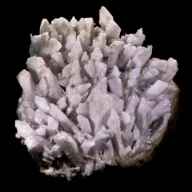 Danburite
A borosilicate that looks exactly like topaz, named after a Connecticut town that paved over the deposit.
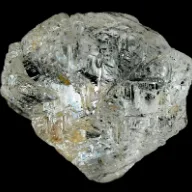 Phenakite
A beryllium silicate so like quartz that it was named the deceiver.
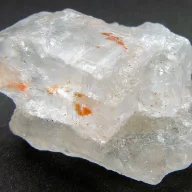 Halite
Rock salt: perfect cubes that will dissolve in a damp room.
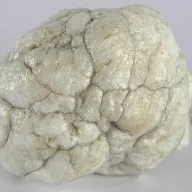 Howlite
White nodules with black veins, and the most dyed mineral in the trade.
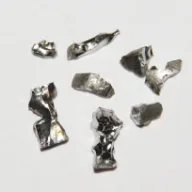 Iridium
The most corrosion-proof metal there is, and the layer that dates the end of the dinosaurs.
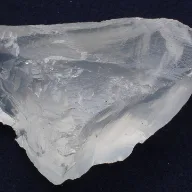 Petalite
The mineral lithium was discovered in, and it looks like nothing at all.
Cradle of Humankind stone
Ordinary grey chalcedony from an extraordinary place outside Johannesburg.
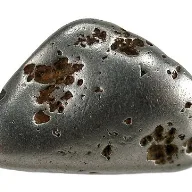 Platinum
Little silver, the Spanish called it, and threw it back in the river.
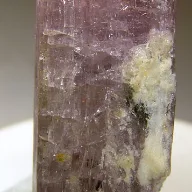 Scapolite
A tetragonal silicate that glows yellow under ultraviolet and fades in the sun.
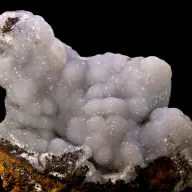 Smithsonite
Zinc carbonate in botryoidal crusts, named after the man who founded the Smithsonian.
Shiva lingam
A Narmada river cobble, ground by hand into an egg and sold as a sacred stone.
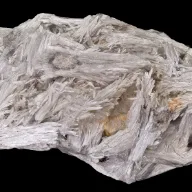 Tremolite
The white amphibole that makes nephrite jade, and, in its fibrous form, asbestos.
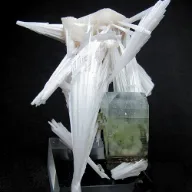 Zeolite
Minerals built like sponges at the atomic scale, which is why industry uses more of them than jewellers do.
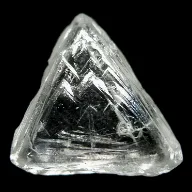 Diamond
Carbon, arranged the hard way, and carried up from two hundred kilometres down.