 Lunarya
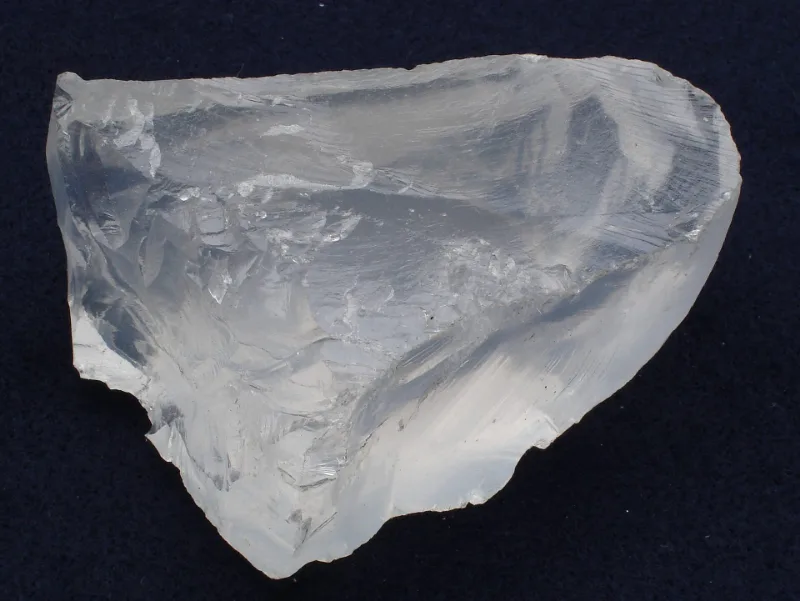
Petalite
Petalite is a lithium aluminium silicate, LiAlSi₄O₁₀, and it is one of the plainest-looking minerals with an important history. It is colourless, white, grey or faintly pink, glassy where it is fresh, with one perfect cleavage that splits it into leaf-like plates — which is what the name means, from the Greek petalon. Hardness 6 to 6.5, and transparent material facets into stones that look like very clean colourless quartz.
Its importance is chemical. In 1817 Johan August Arfwedson, working in Berzelius's laboratory on petalite from the island of Utö in Sweden, found that its alkali content could not be accounted for by sodium or potassium, and named the new element lithium after the Greek for stone, because unlike soda and potash it had been found in a mineral rather than in plant ash. Petalite is still mined as a lithium ore, and is also valued for its very low thermal expansion in ceramic glazes and cookware.
In short
- Colour
- Clear and white
- Mineral
- Silicate
- Formula
- LiAlSi₄O₁₀
- Hardness
- 6–6.5 on the Mohs scale
- Crystal system
- Monoclinic
- Found in
- Utö in Sweden, the type locality; the Bikita pegmatite in Zimbabwe, which is the great commercial deposit and the source of most gem material; Minas Gerais in Brazil, Namibia, Afghanistan, Western Australia, Elba, and Maine and California in the United States.
- Element
- Air
- Planet
- Neptune
- Chakra
- Crown
- Handling
- Water and light are both fine
How it forms
The lithium pegmatites, and the same pockets that produce lepidolite, spodumene and elbaite tourmaline. Petalite is the mineral that forms at relatively low pressure in that family, and where the conditions later change it can break down into a fine intergrowth of spodumene and quartz, which mineralogists call SQUI and which preserves the original crystal's outline while destroying its interior.
In human hands
Named in 1800 by d'Andrada. Its 1817 moment made it permanently interesting, and lithium went on to become a treatment for bipolar disorder, a component of grease and glass, and now the metal the energy transition runs on. As a gem it has always been marginal — a colourless stone with modest fire has to compete with quartz and topaz — and a cut petalite is usually bought by someone who collects unusual gems rather than by someone who wants a ring.
Varieties and trade names
- Colourless gem petalite
- Transparent faceted stones, mostly from Bikita in Zimbabwe; clean, pale and collected rather than worn.
- Pink petalite
- Faintly rose-tinted material, the colour usually attributed to traces of manganese; the crystal trade's favourite.
- Cleavage plates
- White leaf-like sheets splitting off a mass; the habit the mineral is named for.
- Massive petalite
- The ore-grade material, grey-white and dull, mined by the thousand tonnes for lithium and ceramics.
- Castorite
- An old name for the Elba petalite, given because it occurs with pollucite, which was named for the other twin.
Telling it from a fake
It is light in the hand for its size and has one perfect cleavage, which quartz does not have at all — look for a flat reflective plane running through the piece. Quartz is harder and shows conchoidal fracture. Feldspar has two cleavages at a right angle. Spodumene is harder again and its cleavages meet at 87 degrees. Pollucite, which grows alongside it, has no cleavage and is heavier.
None of this needs a laboratory, and none of it is proof. A shop that will not say whether a stone is treated has answered the question; ask, and have the answer written on the receipt.
What it is said to do
The crystal literature groups petalite with the quiet, high stones — danburite, phenakite, selenite — and reads it as stillness, release from anxiety, and clear air after a difficult period; it is often called the angel stone. It is given to Neptune, to Leo and Pisces, and to the crown. The lithium connection is why it was picked, and as with lepidolite it is worth saying plainly that no lithium leaves the stone.
Living with it
The cleavage is everything. A knock in the wrong direction splits it cleanly, so a faceted petalite belongs in a pendant rather than a ring, and specimens should be handled by the body and not the plates. Water and sunlight are harmless. No ultrasonic, no steam, and no sudden heat.
In magic
Petalite is used in modern practice for stillness and for release from anxiety, one of the angel stones of the crystal books, held in quiet meditation and set on altars for calm. The tradition is recent. It cleaves easily, so it is handled by its body and kept away from heat.
- Energy
- Projective
- Day
- Thursday
- Worked for
- Calm and peace
More of this colour
 Clear quartz
The plain one, and the one the modern world actually runs on.
 Selenite
Gypsum in satin fibres, soft enough to mark with a fingernail.
 Moonstone
Feldspar with a light inside it that moves when the stone does.
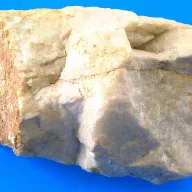 Amblygonite
A lithium phosphate from the pegmatites, and the palest yellow gem you have never heard of.
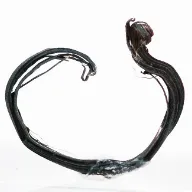 Silver
The metal of the moon, grown in wires and ferns in the veins of the earth.
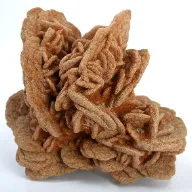 Baryte
The heavy stone: barium sulfate, and the reason a rose can grow in the desert.
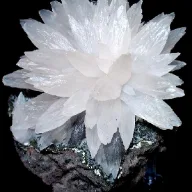 Calcite
The commonest carbonate on Earth, and the crystal that showed physicists light has two paths.
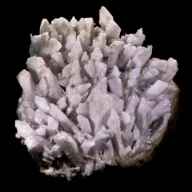 Danburite
A borosilicate that looks exactly like topaz, named after a Connecticut town that paved over the deposit.
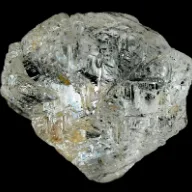 Phenakite
A beryllium silicate so like quartz that it was named the deceiver.
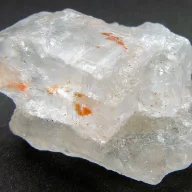 Halite
Rock salt: perfect cubes that will dissolve in a damp room.
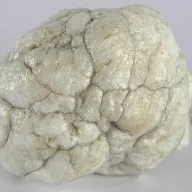 Howlite
White nodules with black veins, and the most dyed mineral in the trade.
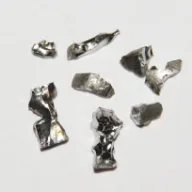 Iridium
The most corrosion-proof metal there is, and the layer that dates the end of the dinosaurs.
Cradle of Humankind stone
Ordinary grey chalcedony from an extraordinary place outside Johannesburg.
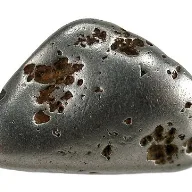 Platinum
Little silver, the Spanish called it, and threw it back in the river.
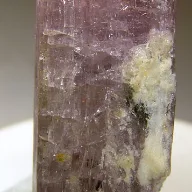 Scapolite
A tetragonal silicate that glows yellow under ultraviolet and fades in the sun.
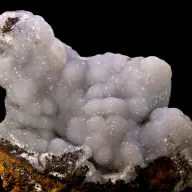 Smithsonite
Zinc carbonate in botryoidal crusts, named after the man who founded the Smithsonian.
Shiva lingam
A Narmada river cobble, ground by hand into an egg and sold as a sacred stone.
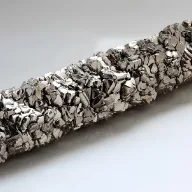 Titanium
The ninth commonest element in the crust, and almost never found as a metal.
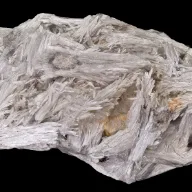 Tremolite
The white amphibole that makes nephrite jade, and, in its fibrous form, asbestos.
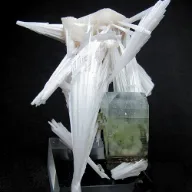 Zeolite
Minerals built like sponges at the atomic scale, which is why industry uses more of them than jewellers do.
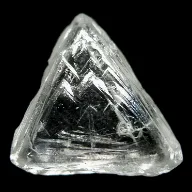 Diamond
Carbon, arranged the hard way, and carried up from two hundred kilometres down.