 Lunarya
Air
Air is distance: the step back that turns an experience into an idea about the experience. It connects, compares, explains and negotiates, and it is most at home in conversation. Its weakness is the same as its strength — it would often rather think about a feeling than have one.
Air is the element of the mind and of connection. Its signs live among ideas, words and other people, and they meet the world by thinking about it and talking it over. Gemini is air as curiosity, mutable and quick; Libra is air as balance and relationship, cardinal and fair; Aquarius is air as principle and community, fixed and independent. Air gives a chart perspective, fairness and the gift of explaining; it can also hold a feeling at arm's length and live a little too far above the ground.
In short
- Polarity
- Yang, outgoing
- Energy
- Projective
When it is strong
- Lives in ideas and conversation
- Sociable, curious, fair
- Cool where feelings run hot
- Restless without people or news
When it is missing
- Feels first and explains later, or never
- Finds abstract talk tiring
- Learns by doing rather than reading
- Drawn to people who can put it into words
A chart's balance is counted from where the Sun, the Moon, the ascendant and the planets fall: an element or a modality with many of them is strong, one with none is missing. The lists are the tradition's rule of thumb, not a verdict.
The air signs
Air in stone
The stones the crystal books give to the element, whatever their sign. The element is also what makes a stone projective or receptive in magic.
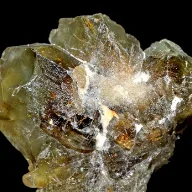 Alexandrite
Green by day and red by lamplight, and named for a tsar who was not yet one.
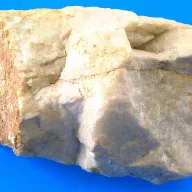 Amblygonite
A lithium phosphate from the pegmatites, and the palest yellow gem you have never heard of.
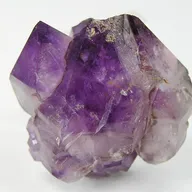 Amethyst
Quartz that grew purple in the dark, and the stone everyone starts with.
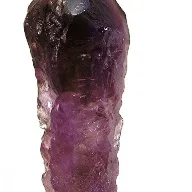 Ametrine
Amethyst and citrine in the same crystal, from one mine in the Bolivian jungle.
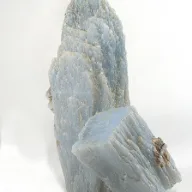 Angelite
Blue anhydrite from Peru: gypsum with the water taken out, and a name the trade gave it.
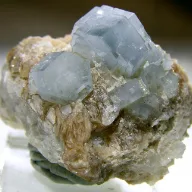 Apatite
The mineral teeth are made of, and the one that gives 5 on the Mohs scale its meaning.
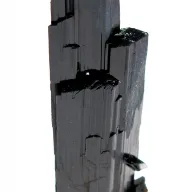 Arfvedsonite
A black amphibole with a blue flash, named for the man who found lithium.
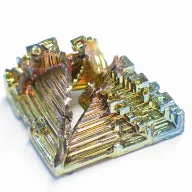 Bismuth
A metal that grows in rainbow staircases — in a saucepan, mostly.
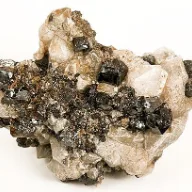 Brookite
Titanium dioxide in its rarest shape: thin red-brown blades grown in Alpine cracks.
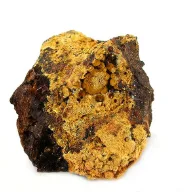 Cacoxenite
Golden needles in iron ore, named the bad guest because they ruined the smelt.
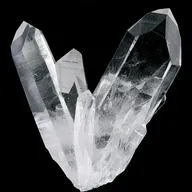 Clear quartz
The plain one, and the one the modern world actually runs on.
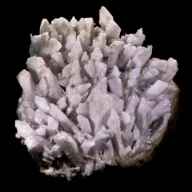 Danburite
A borosilicate that looks exactly like topaz, named after a Connecticut town that paved over the deposit.
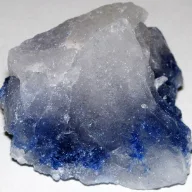 Dumortierite
A blue borosilicate that reaches the shops disguised as quartz.
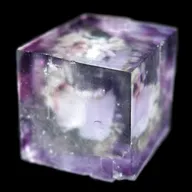 Fluorite
The stone that gave fluorescence its name, in every colour at once.
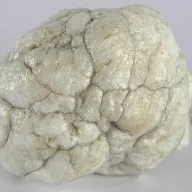 Howlite
White nodules with black veins, and the most dyed mineral in the trade.
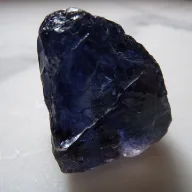 Iolite
Cordierite: violet-blue from one side, straw yellow from another.
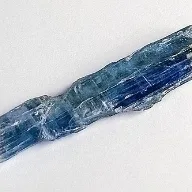 Kyanite
Blue blades with two hardnesses: soft along their length, hard across it.
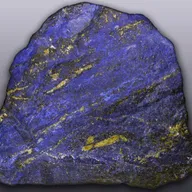 Lapis lazuli
A blue rock with gold in it, mined in one valley for six thousand years.
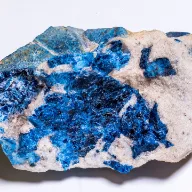 Lazulite
An azure phosphate with a name one letter away from lapis lazuli.
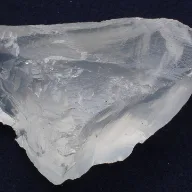 Petalite
The mineral lithium was discovered in, and it looks like nothing at all.
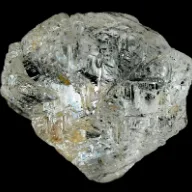 Phenakite
A beryllium silicate so like quartz that it was named the deceiver.
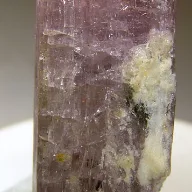 Scapolite
A tetragonal silicate that glows yellow under ultraviolet and fades in the sun.
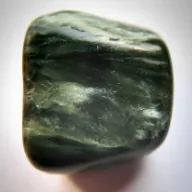 Seraphinite
Dark green chlorite with silver feathers running through it.
 Sodalite
Royal blue veined with white, and the lapis on the shelf that is not lapis.
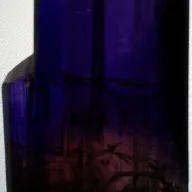 Tanzanite
One hill in Tanzania has all of it, and it was only found in 1967.
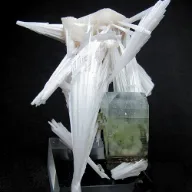 Zeolite
Minerals built like sponges at the atomic scale, which is why industry uses more of them than jewellers do.