 Lunarya
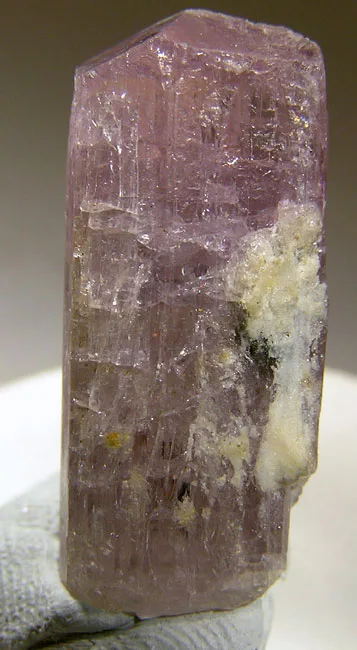
Scapolite
Scapolite is not one mineral but a series, running from marialite, the sodium-chlorine end, to meionite, the calcium-carbonate end, with almost everything found in nature somewhere between. The formula reflects that: (Na,Ca)₄(Al,Si)₁₂O₂₄(Cl,CO₃). It grows in long square prisms — the name is from the Greek skapos, a rod — in colourless, yellow, grey, pink and violet, and it is moderately hard at 5.5 to 6.
Two things make it memorable. The first is fluorescence: most scapolite glows a strong yellow or orange under longwave ultraviolet, which is the quickest way to pick it out of a tray of pale crystals. The second is that the violet and pink material fades. The colour comes from radiation-induced defects, and daylight undoes them over months, so a lilac scapolite kept on a sill will end up grey. Cat's-eye scapolite, cut from material full of parallel needle inclusions, is a small speciality of its own.
In short
- Colour
- Clear and white
- Mineral
- Silicate
- Formula
- (Na,Ca)₄(Al,Si)₁₂O₂₄(Cl,CO₃)
- Hardness
- 5.5–6 on the Mohs scale
- Crystal system
- Tetragonal
- Found in
- Tanzania and Madagascar for gem material; Myanmar for the cat's-eyes; Brazil, Afghanistan, Kenya, Mozambique, the Kola Peninsula in Russia, and the Grenville marbles of Ontario and Quebec, which give the large crude crystals museums like.
- Element
- Air
- Planet
- Uranus
- Chakra
- Crown
- Handling
- Fades in sunlight
How it forms
Scapolite is a metamorphic mineral that needs something unusual: chlorine or carbon dioxide in the fluid. That makes it typical of metamorphosed limestone and of rocks that have been soaked by saline fluids — marbles, skarns, and altered gabbros. Where a granite has intruded a salty sedimentary sequence, scapolite tends to appear, which is why geologists read it as a sign of what the fluid was made of rather than just how hot things got.
In human hands
Described in 1801 and long treated as a mineralogical curiosity with too many names — wernerite, dipyre, mizzonite and half a dozen others all belong to the same series and clutter old labels. Gem scapolite is a twentieth-century arrival, mostly since the Tanzanian and Malagasy finds, and remains a collector's stone: beautiful, reasonably large, and too soft and too prone to fading for most jewellers to bother with.
Varieties and trade names
- Yellow scapolite
- The commonest gem colour, honey to lemon, from Tanzania and Madagascar; stable and often clean.
- Violet scapolite
- Lilac to purple and lovely, and it fades in daylight; sold with that warning by honest dealers.
- Cat's-eye scapolite
- Cabochons cut from needle-filled material, showing a single sharp band of light; usually white or pink.
- Wernerite
- An old name for the series still on museum labels; the same mineral under a nineteenth-century heading.
- Marialite and meionite
- The two end members, sodium-chlorine and calcium-carbonate; almost nothing found is pure either one.
Telling it from a fake
An ultraviolet lamp is the fastest test: a strong yellow glow under longwave separates scapolite from quartz, beryl and topaz at a glance. It has two directions of cleavage and a fibrous, silky look on a broken surface. Quartz is harder and has no cleavage; beryl is harder and hexagonal in section; topaz is much harder and heavier. A square cross-section on a prism points to scapolite or to a tetragonal cousin.
None of this needs a laboratory, and none of it is proof. A shop that will not say whether a stone is treated has answered the question; ask, and have the answer written on the receipt.
What it is said to do
The crystal literature reads it as a stone of change and of finishing things: the long project, the habit being given up, the point at which one commits to a new arrangement. It is placed at the crown, under Uranus, with Taurus and Aquarius. Nothing older attaches to it, and the reading appears to come from the way the mineral itself is a series in transition from one composition to another.
Living with it
Keep it out of the sun, especially the violet and pink material, which genuinely fades. Water is fine and heat is not. It is brittle with two cleavages, so avoid knocks and ultrasonic tanks, and set a cut stone in a pendant rather than a ring. Store it in a drawer rather than a window.
In magic
Scapolite has no older magic. The books that use it give it to change and completion — finishing a long project, giving up a habit, committing to a new arrangement — and it is kept on the altar for the length of such a working. Keep the violet and pink ones out of the sun.
- Energy
- Projective
- Day
- Saturday
- Worked for
- Change and letting go
More of this colour
 Clear quartz
The plain one, and the one the modern world actually runs on.
 Selenite
Gypsum in satin fibres, soft enough to mark with a fingernail.
 Moonstone
Feldspar with a light inside it that moves when the stone does.
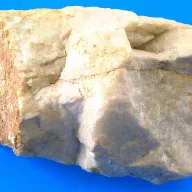 Amblygonite
A lithium phosphate from the pegmatites, and the palest yellow gem you have never heard of.
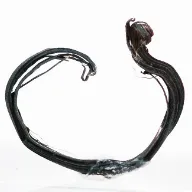 Silver
The metal of the moon, grown in wires and ferns in the veins of the earth.
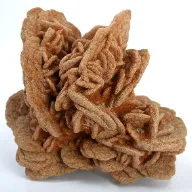 Baryte
The heavy stone: barium sulfate, and the reason a rose can grow in the desert.
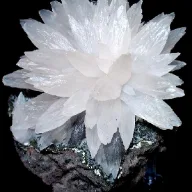 Calcite
The commonest carbonate on Earth, and the crystal that showed physicists light has two paths.
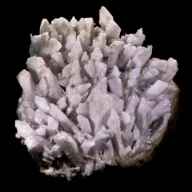 Danburite
A borosilicate that looks exactly like topaz, named after a Connecticut town that paved over the deposit.
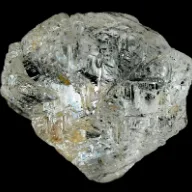 Phenakite
A beryllium silicate so like quartz that it was named the deceiver.
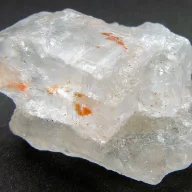 Halite
Rock salt: perfect cubes that will dissolve in a damp room.
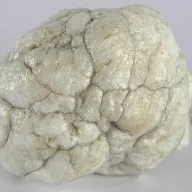 Howlite
White nodules with black veins, and the most dyed mineral in the trade.
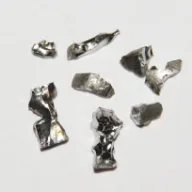 Iridium
The most corrosion-proof metal there is, and the layer that dates the end of the dinosaurs.
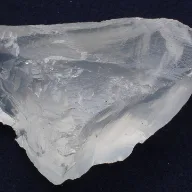 Petalite
The mineral lithium was discovered in, and it looks like nothing at all.
Cradle of Humankind stone
Ordinary grey chalcedony from an extraordinary place outside Johannesburg.
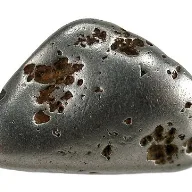 Platinum
Little silver, the Spanish called it, and threw it back in the river.
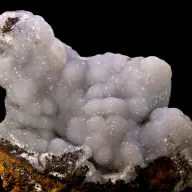 Smithsonite
Zinc carbonate in botryoidal crusts, named after the man who founded the Smithsonian.
Shiva lingam
A Narmada river cobble, ground by hand into an egg and sold as a sacred stone.
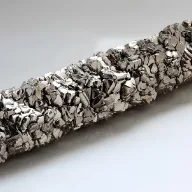 Titanium
The ninth commonest element in the crust, and almost never found as a metal.
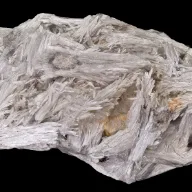 Tremolite
The white amphibole that makes nephrite jade, and, in its fibrous form, asbestos.
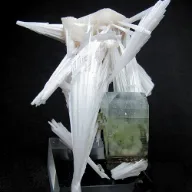 Zeolite
Minerals built like sponges at the atomic scale, which is why industry uses more of them than jewellers do.
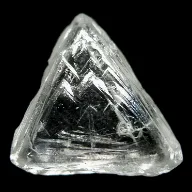 Diamond
Carbon, arranged the hard way, and carried up from two hundred kilometres down.