 Lunarya
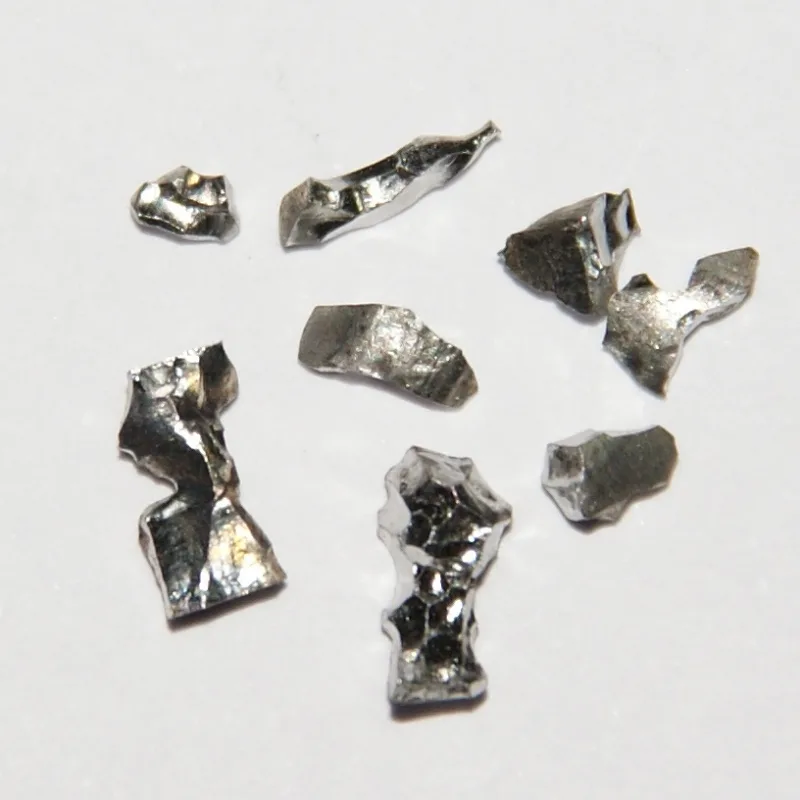
Iridium
Iridium is element 77, a hard silver-white metal of the platinum group. It is the second densest substance known, at 22.56 grams to the cubic centimetre, just behind osmium; it is the most corrosion-resistant metal, untouched by acids including aqua regia; and it is one of the rarest elements in the Earth's crust, at roughly one part in a billion. A piece the size of a sugar cube weighs as much as a small apple.
It occurs in nature as native metal and as alloys with osmium and platinum — osmiridium and iridosmine — in grains rather than crystals, so there is no iridium specimen in the sense that there is a quartz specimen, and pieces sold in the crystal trade are refined industrial metal. Its uses follow from its stubbornness: crucibles for growing sapphire and silicon, spark plug tips that last a hundred thousand kilometres, fountain pen nibs, iridium-192 sources for industrial radiography, and until 2019 the international prototype kilogram, a platinum-iridium cylinder kept outside Paris.
In short
- Colour
- Clear and white
- Mineral
- Native element
- Formula
- Ir
- Hardness
- 6.5 on the Mohs scale
- Crystal system
- Cubic
- Found in
- As native metal and alloys in the Bushveld complex of South Africa, at Norilsk and in the Urals in Russia, at Sudbury in Canada, in Zimbabwe, Colombia and Alaska. In practice nearly all of it is recovered as a by-product of refining platinum and nickel, a few tonnes a year for the whole world.
- Element
- Earth
- Planet
- Uranus
- Chakra
- Crown
- Handling
- Water and light are both fine
How it forms
Iridium is siderophile: it likes iron, and when the young Earth separated into core and mantle almost all of it went down with the iron. What is left in the crust arrives either from the mantle, in the great layered intrusions, or from space, since meteorites never went through that separation and kept their full share.
In human hands
Smithson Tennant found it in 1803, in the black residue left when crude platinum is dissolved in aqua regia, and named it for Iris after the colours of its salts. Its famous chapter came in 1980, when Luis and Walter Alvarez reported that the thin clay layer marking the Cretaceous-Palaeogene boundary carries far more iridium than crustal rock should, and argued that the excess came from an asteroid. The crater at Chicxulub was identified a decade later. Iridium is the reason we know how that world ended.
Varieties and trade names
- Native iridium
- Natural grains, usually alloyed with osmium and platinum, recovered from placer deposits.
- Osmiridium and iridosmine
- The natural alloys, once used for pen nibs and compass bearings for their hardness.
- Refined iridium
- The bright irregular pieces sold to collectors; industrial metal, purity stamped or certified.
- Platinum-iridium alloy
- Ten per cent iridium makes platinum hard enough for standards; the old kilogram and metre were this.
- Iridium-192
- A radioactive isotope used for radiography and brachytherapy, industrial and medical only.
Telling it from a fake
Weight settles it. Iridium is nearly twice as dense as lead and a small piece feels wrong in the hand, far heavier than it looks. It is extremely hard and brittle, not malleable like silver or platinum, and no acid will touch it, so a piece that tarnishes or dissolves is something else. Most jewellery sold as iridium is a platinum alloy with a little in it, which is a legitimate material but not the same thing, and the price of the real metal is never low.
None of this needs a laboratory, and none of it is proof. A shop that will not say whether a stone is treated has answered the question; ask, and have the answer written on the receipt.
What it is said to do
There is almost none, and it is more honest to say so than to invent it. Iridium reached the crystal trade only in the last decade or two; the readings attached to it — incorruptibility, the long view, holding a standard — are reasoned straight from the metal's own properties rather than handed down. It is filed with Uranus, with Aquarius, and at the crown. Anyone who tells you the ancients used iridium is mistaken: nobody could isolate it until 1803.
Living with it
Nothing harms it. Water, air, sunlight, acid and time all leave it exactly as it was, which is most of the point. Solid metal is not a health hazard; finely divided iridium powder is another matter, and iridium-192 sources are radioactive industrial equipment that has nothing to do with anything a shop sells.
In magic
Iridium has no magical tradition, and the few practitioners who use it reason straight from the metal: incorruptible, it is a stone of standards kept and promises held, used in workings for grounding and endurance. No ritual can harm it, which is the one thing everyone agrees on.
- Energy
- Receptive
- Day
- Saturday
- Worked for
- Grounding and endurance
More of this colour
 Clear quartz
The plain one, and the one the modern world actually runs on.
 Selenite
Gypsum in satin fibres, soft enough to mark with a fingernail.
 Moonstone
Feldspar with a light inside it that moves when the stone does.
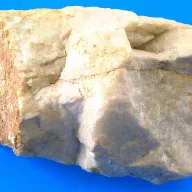 Amblygonite
A lithium phosphate from the pegmatites, and the palest yellow gem you have never heard of.
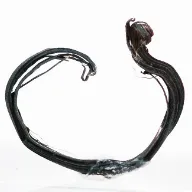 Silver
The metal of the moon, grown in wires and ferns in the veins of the earth.
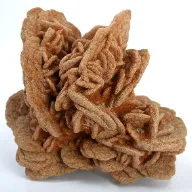 Baryte
The heavy stone: barium sulfate, and the reason a rose can grow in the desert.
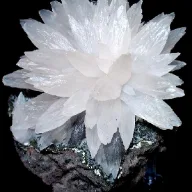 Calcite
The commonest carbonate on Earth, and the crystal that showed physicists light has two paths.
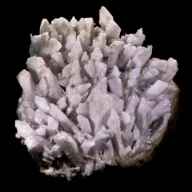 Danburite
A borosilicate that looks exactly like topaz, named after a Connecticut town that paved over the deposit.
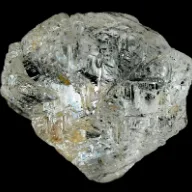 Phenakite
A beryllium silicate so like quartz that it was named the deceiver.
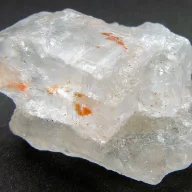 Halite
Rock salt: perfect cubes that will dissolve in a damp room.
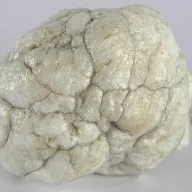 Howlite
White nodules with black veins, and the most dyed mineral in the trade.
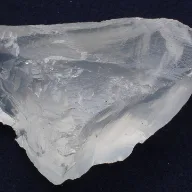 Petalite
The mineral lithium was discovered in, and it looks like nothing at all.
Cradle of Humankind stone
Ordinary grey chalcedony from an extraordinary place outside Johannesburg.
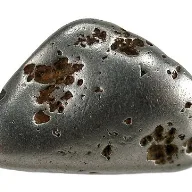 Platinum
Little silver, the Spanish called it, and threw it back in the river.
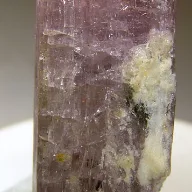 Scapolite
A tetragonal silicate that glows yellow under ultraviolet and fades in the sun.
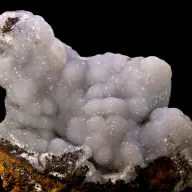 Smithsonite
Zinc carbonate in botryoidal crusts, named after the man who founded the Smithsonian.
Shiva lingam
A Narmada river cobble, ground by hand into an egg and sold as a sacred stone.
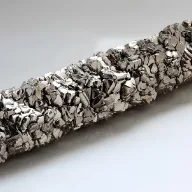 Titanium
The ninth commonest element in the crust, and almost never found as a metal.
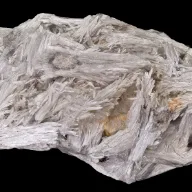 Tremolite
The white amphibole that makes nephrite jade, and, in its fibrous form, asbestos.
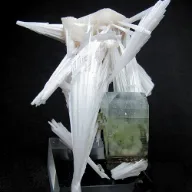 Zeolite
Minerals built like sponges at the atomic scale, which is why industry uses more of them than jewellers do.
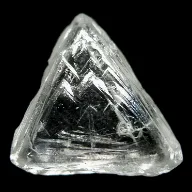 Diamond
Carbon, arranged the hard way, and carried up from two hundred kilometres down.