 Lunarya
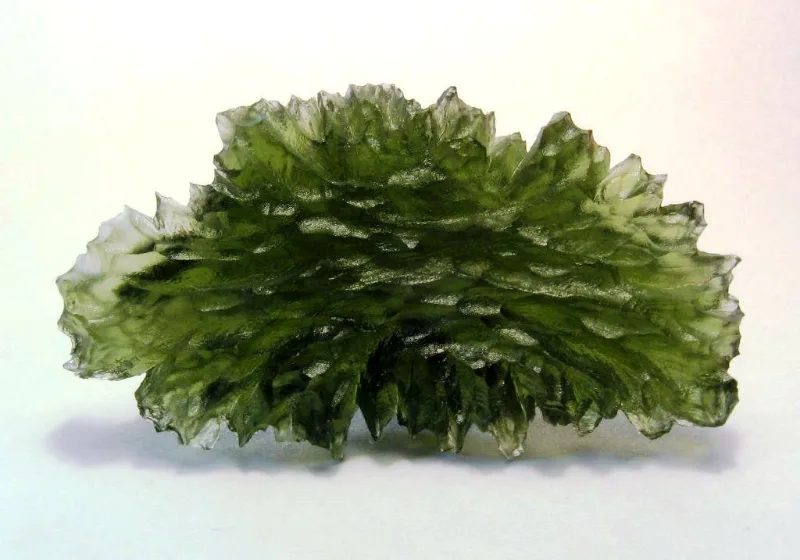
Moldavite
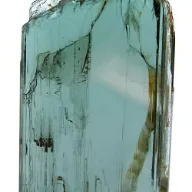
Moldavite is a tektite: natural glass thrown out of a meteorite impact. About 14.8 million years ago an asteroid struck what is now the Nördlinger Ries in Bavaria, melted the sandy sediment it landed on, and flung the melt eastward across several hundred kilometres. It cooled in flight and landed in Bohemia and Moravia as bottle-green glass, and it has been weathering out of the sediment there ever since.
It is worth being exact about what that means, because the market is not. Moldavite is terrestrial rock, melted by something that came from space; it is not itself material from space, and it contains no meteorite. Chemically it is about 80 per cent silica with very little water, which is why it is glassy and brittle rather than crumbly. The deeply sculptured surface that collectors pay for — the hedgehog pieces from Besednice — was etched over millions of years by acidic groundwater in the sediment, not formed in flight.
In short
- Colour
- Green
- Mineral
- Natural glass
- Formula
- SiO₂
- Hardness
- 5.5–7 on the Mohs scale
- Crystal system
- None — it is a glass
- Found in
- Southern Bohemia around Český Krumlov and Besednice, and southern Moravia near Znojmo, in the Czech Republic; a little in Austria and Germany. There is nowhere else. The productive layers are thin, largely worked out, and mostly on protected or private land.
- Element
- Fire
- Planet
- Uranus
- Chakra
- Heart
- Handling
- Water and light are both fine
How it forms
The impact vaporised and melted rock at temperatures over 2,000 degrees. Droplets of that melt were thrown clear of the atmosphere on ballistic trajectories, cooled and froze into glass as they flew, and fell in a strewn field 400 kilometres east of the crater. The shapes — discs, drops, dumbbells, rods — are what a spinning drop of liquid glass does while it falls. The etching came later, underground.
In human hands
Known locally for a very long time; pieces have been found in Stone Age settlements, including at Willendorf beside the famous figurine, which suggests they were being picked up and kept 30,000 years ago. Described scientifically in 1786 and named after the Vltava, the river the Germans call Moldau. Its price rose steeply from about 2019, when it became a social media stone, and both faking and sensational claims rose with it.
Varieties and trade names
- Besednice hedgehogs
- The most deeply etched pieces, spiky and sculptural; small, scarce and the most expensive by weight.
- Moravian moldavite
- Browner and less sculptured than the Bohemian, from the Znojmo area.
- Faceted moldavite
- Cut stones, usually from smoother material; clean facet rough is rarer than the rough looks.
- Other tektites
- Libyan desert glass, which has a page of its own here, and indochinites, australites and bediasite: the same phenomenon from other impacts.
- Fake moldavite
- Green bottle glass, moulded and sandblasted; round bubbles, repeated shapes and an even surface give it away.
Telling it from a fake
Real moldavite is a mossy bottle green, translucent, and full of thin wormy bubbles and swirls of slightly different glass. Held to the light it should look like a fluid that stopped moving. Fakes are a brighter, flatter green, have round bubbles, and repeat the same shape across a tray, because they came out of a mould; the etching on a fake is regular rather than fractal. Given the prices, buy from someone who will take it back.
None of this needs a laboratory, and none of it is proof. A shop that will not say whether a stone is treated has answered the question; ask, and have the answer written on the receipt.
What it is said to do
Everything written about moldavite is about intensity. It is the stone the books warn people about: rapid change, things coming loose, a period of upheaval that the literature calls the moldavite flush and treats as a feature. It is given to Uranus, to Aquarius and Sagittarius, and to the heart. The tradition is entirely of the last fifty years, and the stone's real history — thirty thousand years of being picked up because it is beautiful — is the better story.
Living with it
It is glass, so it is brittle and chips, and the etched points snap off if it is carried loose. Water and light do it no harm. Do not put it in an ultrasonic cleaner, and do not scrub the sculptured surface, which is the part that gives it its value and is impossible to restore.
In magic
Moldavite came into magic with the New Age, in the 1980s, and is used for transformation of the abrupt kind: workings to break a rut, start over or let something end. The books tell beginners to keep their sessions short, which is the literature's way of making a stone sound strong. People in the Danube valley were picking it up as a treasure tens of thousands of years ago, which is the real history and the better one.
- Energy
- Projective
- Day
- Saturday
- Worked for
- Change and letting go
More of this colour
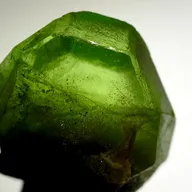 Peridot
Green olivine from the mantle, and occasionally from space.
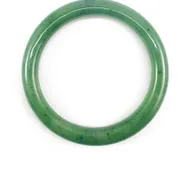 Jade
Two different minerals under one name, and the toughest stone on this page.
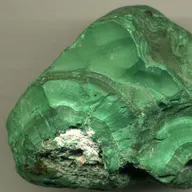 Malachite
Copper gone green, in bands you can read like tree rings.
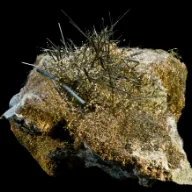 Actinolite
Green needles of amphibole, and the mineral half of all jade is made of.
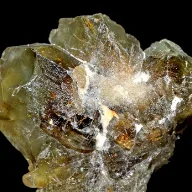 Alexandrite
Green by day and red by lamplight, and named for a tsar who was not yet one.
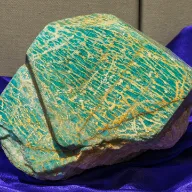 Amazonite
Green feldspar from a river it was never found in.
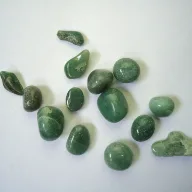 Aventurine
Quartz with a glitter of green mica through it, named by accident.
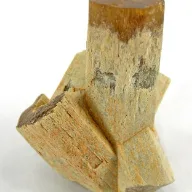 Beryl
One mineral, six famous names: emerald, aquamarine, morganite and the rest are all this.
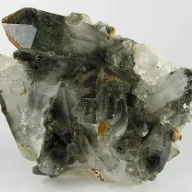 Chlorite
The green that gets into everything: a whole family of soft micaceous minerals, and the ghost inside phantom quartz.
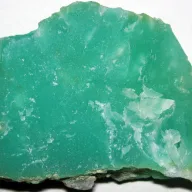 Chrysoprase
Apple-green chalcedony coloured by nickel, and the most valuable of all the quartzes.
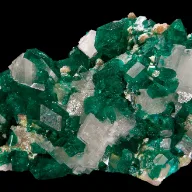 Dioptase
Copper green so convincing that the first crystals sent to Moscow were reported as emeralds.
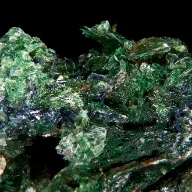 Fuchsite
Muscovite that took up chromium and turned green and glittering.
 Bloodstone
Dark green chalcedony spotted with red, and one of the two birthstones of March.
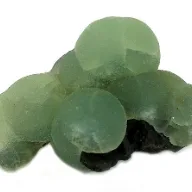 Prehnite
Green botryoidal crusts, usually with black epidote needles through them.
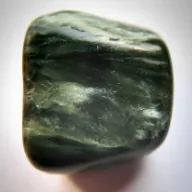 Seraphinite
Dark green chlorite with silver feathers running through it.
Saussurite
What a feldspar becomes when hot water gets at it for long enough.
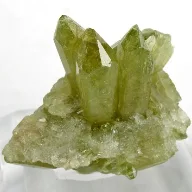 Vesuvianite
Named for the volcano that threw it out, and for looking like several other minerals at once.
 Zoisite
A grey-green rock mineral that produced two of the century's fashionable gems.