 Lunarya
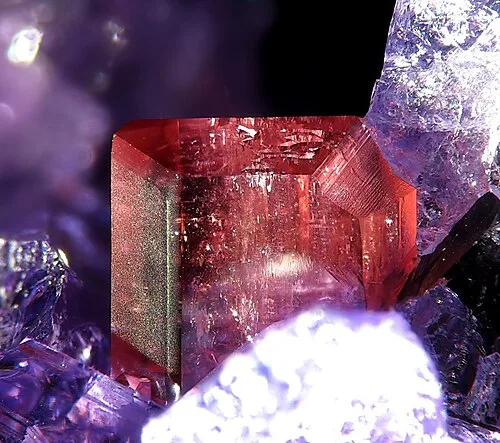
Phosphosiderite
Phosphosiderite is hydrated iron phosphate, FePO₄·2H₂O, and the name is simply its composition: phosphorus and sideros, the Greek for iron. Crystals are small and a startling red-violet; the massive material that the trade sells is a soft lilac, clouded and veined with grey and white, cut into cabochons and beads that look like a paler charoite.
It is the monoclinic dimorph of strengite, which has the same formula in an orthorhombic arrangement, and the two often grow in the same crust. Iron in its ferric state gives the colour. The water in the formula is structural and matters in practice: heat drives it off, and a piece left on a sunny windowsill or dropped into hot water pales, crazes and eventually falls apart. At 3.5 to 4 on the Mohs scale it is softer than window glass and about as hard as a copper coin.
In short
- Colour
- Violet and pink
- Mineral
- Phosphate
- Formula
- FePO₄·2H₂O
- Hardness
- 3.5–4 on the Mohs scale
- Crystal system
- Monoclinic
- Found in
- Chile supplies almost all the lilac lapidary material. Crystals come from the Bavarian pegmatite at Hagendorf and from Pleystein in Germany, and from Portugal, Argentina, Brazil, Rwanda and several American pegmatite districts.
- Element
- Water
- Planet
- Neptune
- Chakra
- Third eye
- Handling
- Keep out of water and sunlight
How it forms
A secondary mineral: it forms where phosphate-bearing pegmatites weather and where iron minerals meet phosphate-rich water, growing as crusts, botryoidal skins and small crystals over triphylite and the other primary phosphates as they break down. The Chilean material formed the same way on a larger scale, in weathered rock where enough of it accumulated to be worth cutting.
In human hands
Bruhns and Busz named it in 1890 from German material, and for a hundred years it was a phosphate collector's mineral, admired in centimetre crystals and unknown to everyone else. The Chilean lilac material reached the bead and cabochon trade in the 2000s and became popular quickly, since there is not much else that colour at that price. It is still frequently mislabelled on stalls as lepidolite, purpurite or even charoite.
Varieties and trade names
- Chilean phosphosiderite
- The lilac massive stone, grey-veined, cut into cabochons, beads and palm stones.
- Hagendorf crystals
- German pegmatite crystals, red-violet and glassy, a few millimetres across and prized by collectors.
- Strengite
- The same formula in a different symmetry, pinker and often intergrown with phosphosiderite.
- Phosphosiderite with rockbridgeite
- Violet crusts on dark green-black masses, a common pairing in weathered phosphate pegmatites.
- Cabochon grade
- Selected massive material with even colour; the veining is what tells it from dyed imitations.
Telling it from a fake
Softness is the first test: a steel pin marks it easily, where charoite and lepidolite resist a little more and jade or quartz will not mark at all. Lepidolite is micaceous and flakes; charoite is fibrous with a silky swirl and is harder; purpurite is darker, almost metallic, and streaks purple. Dyed magnesite and dyed howlite hold their colour in the cracks and are more even in the body, and a cotton bud with a little acetone will lift dye that phosphosiderite does not give up.
None of this needs a laboratory, and none of it is proof. A shop that will not say whether a stone is treated has answered the question; ask, and have the answer written on the receipt.
What it is said to do
The modern reading is gentle: a stone given for grief, for the settling that has to happen after a loss, and for the kind of calm that is not the same as cheerfulness. It is placed at the third eye or the heart, under Neptune, with Pisces and Virgo. The tradition is only a couple of decades old and follows the colour, as lilac stones usually are read this way.
Living with it
The most fragile stone on this page. Keep it dry — no baths, no tap water, no ultrasonic — and keep it out of direct sun, which fades the lilac. Wipe with a dry cloth. Set it in a pendant rather than a ring, where it will not be knocked, and do not store it against quartz or anything harder.
In magic
A stone for grief work in recent practice: set on an ancestor altar or beside a photograph with a white candle, held through the quiet part of a rite of remembrance, and kept near in the weeks after a loss. Because it is fragile and its lilac fades, it belongs on an indoor altar and in short, candlelit rites, never in moon water, salt or a sunny window.
- Energy
- Receptive
- Day
- Thursday
- Worked for
- Comfort and recovery · Calm and peace
More of this colour
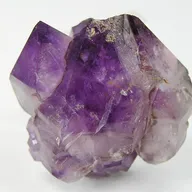 Amethyst
Quartz that grew purple in the dark, and the stone everyone starts with.
 Fluorite
The stone that gave fluorescence its name, in every colour at once.
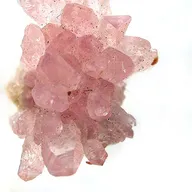 Rose quartz
The pink one, given away more often than it is bought.
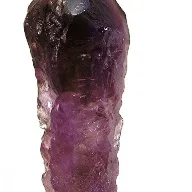 Ametrine
Amethyst and citrine in the same crystal, from one mine in the Bolivian jungle.
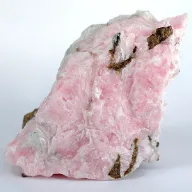 Bustamite
A pale pink manganese silicate from the world's strangest ore bodies, and rhodonite's quieter cousin.
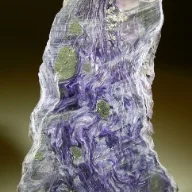 Charoite
A violet rock that exists in one valley in Siberia and nowhere else on Earth.
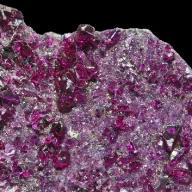 Kämmererite
Chlorite with chromium in it, in a magenta nothing else reaches.
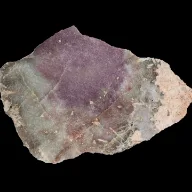 Lepidolite
Lilac mica, and the rock the world's lithium was first found in.
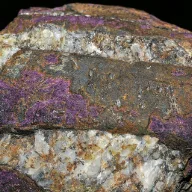 Purpurite
A pegmatite phosphate that rusted purple instead of brown.
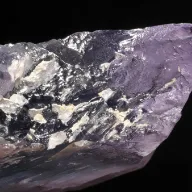 Spodumene
The lithium ore that turns up as pink gem crystals the length of a man.
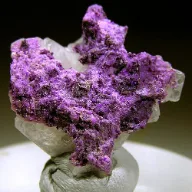 Sugilite
A purple that only exists because one manganese mine in the Kalahari flooded the right way.
 Tanzanite
One hill in Tanzania has all of it, and it was only found in 1967.
 Tourmaline
Thirty-odd minerals sharing one crystal shape, and every colour there is.