 Lunarya

Charoite
Charoite is a potassium calcium silicate that grows as felted, swirling fibres in every shade from lilac to deep violet, with a silky sheen that moves as the stone is turned. It is hard enough to polish, soft enough to carve, and it comes from a single deposit in the Murun massif of Yakutia, near the Chara river, a few square kilometres of ground in one of the coldest inhabited places on the planet.
What is sold is properly charoitite, a rock: charoite fibres with orange-brown tinaksite needles, black aegirine sprays, pearly fedorite and grey microcline all grown through one another, which is why a slab looks like weather. The mineral itself was only accepted in 1978, described by Vera Rogova, and the Soviet authorities controlled the output from the start. Russia still limits how much leaves the deposit each year, and the price has risen accordingly.
In short
- Colour
- Violet and pink
- Mineral
- Silicate
- Formula
- K(Ca,Na)₂Si₄O₁₀(OH,F)·H₂O
- Hardness
- 5–6 on the Mohs scale
- Crystal system
- Monoclinic
- Found in
- The Murun massif, Sakha Republic (Yakutia), Siberia. Nowhere else.
- Element
- Water
- Planet
- Pluto
- Chakra
- Crown
- Handling
- Water and light are both fine
How it forms
A syenite intrusion pushed into a thick pile of limestone and marl, and the hot potassium-rich fluids coming off it cooked the wall rock instead of melting it. At a few hundred degrees, and with exactly the mix of potassium, calcium, silica and water that this one contact provided, the limestone was rebuilt as charoitite. The conditions were narrow enough that nothing like it has been found anywhere else in the world, and the deposit is a metasomatic aureole rather than a vein: a skin of new rock around an intrusion, a couple of kilometres across.
In human hands
Prospectors mapping Yakutia found the purple rock in the 1940s and took it for a strange marble; it took thirty years and a proper study for it to be accepted as a new mineral, named for the Chara river that runs past the massif. The Soviet lapidary industry cut it into boxes, eggs and desk sets, and it reached the West as a novelty in the 1980s. Because it was unknown until the late twentieth century, every piece of folklore attached to it was written after 1978 — an unusually clean case of a stone whose tradition can be dated.
Varieties and trade names
- Charoitite
- The rock itself: charoite with tinaksite, aegirine, fedorite and feldspar, which is what every slab and cabochon is.
- Chatoyant charoite
- Material with the fibres parallel enough to throw a cat's-eye band when cut round.
- Charoite with aegirine suns
- Black radiating sprays of aegirine in the violet, the most decorative combination.
- Tinaksite
- The orange-yellow needles that run through most of it; a mineral of the same deposit, also found nowhere else.
- Imitations
- Dyed quartzite, dyed marble and purple-stained howlite, sold as charoite at a tenth of the price and a hundredth of the interest.
Telling it from a fake
The pattern is the test: feathered, swirling, fibrous, with the sheen shifting as you tilt it, and never a flat even purple. Sugilite is uniformly violet and granular; lepidolite is soft, micaceous and glittery; dyed stones show colour concentrated in cracks and fade unevenly. A knife blade will not scratch charoite, which settles it against most fakes. The orange tinaksite and black aegirine are good confirmation, since the imitators rarely bother with them.
None of this needs a laboratory, and none of it is proof. A shop that will not say whether a stone is treated has answered the question; ask, and have the answer written on the receipt.
What it is said to do
The reading given it everywhere is transformation — the stone for a life that is changing whether or not you agreed to it — with a secondary use for sleep and for cooling an overheated mind. Some books add that it turns fear into a plan. All of it is recent, written in the decades since the mineral was named, and the Siberian cold and the single remote deposit do a lot of work in the storytelling.
Living with it
Wash it briefly in cool water and dry it; do not soak it, and keep it away from acids, since the feldspar and calcite in the rock will etch. It takes a fine polish and holds it. Ordinary display light does it no harm.
In magic
Practitioners who use charoite use it for transformation — the change one did not choose and has to live through — and as a night stone, kept by the bed for sleep that is rest rather than escape. It often goes into protection bags with black tourmaline for times of upheaval. All of it was written after the Siberian deposit was first worked in the 1970s; as a magical stone it is exactly as young as it looks.
- Energy
- Receptive
- Day
- Tuesday
- Worked for
- Change and letting go · Sleep and dreams
More of this colour
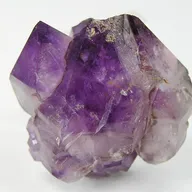 Amethyst
Quartz that grew purple in the dark, and the stone everyone starts with.
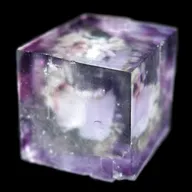 Fluorite
The stone that gave fluorescence its name, in every colour at once.
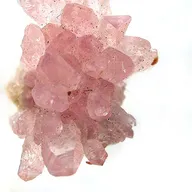 Rose quartz
The pink one, given away more often than it is bought.
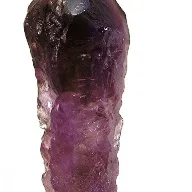 Ametrine
Amethyst and citrine in the same crystal, from one mine in the Bolivian jungle.
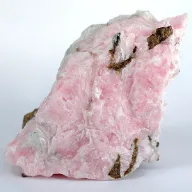 Bustamite
A pale pink manganese silicate from the world's strangest ore bodies, and rhodonite's quieter cousin.
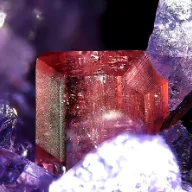 Phosphosiderite
A soft lilac iron phosphate, named after the two things in it.
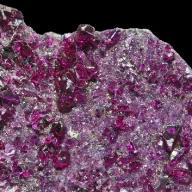 Kämmererite
Chlorite with chromium in it, in a magenta nothing else reaches.
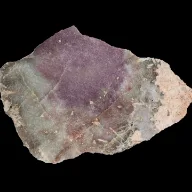 Lepidolite
Lilac mica, and the rock the world's lithium was first found in.
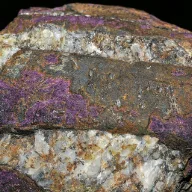 Purpurite
A pegmatite phosphate that rusted purple instead of brown.
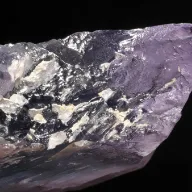 Spodumene
The lithium ore that turns up as pink gem crystals the length of a man.
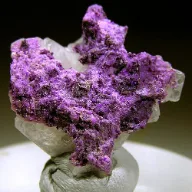 Sugilite
A purple that only exists because one manganese mine in the Kalahari flooded the right way.
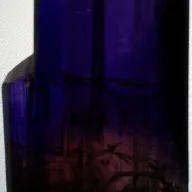 Tanzanite
One hill in Tanzania has all of it, and it was only found in 1967.
 Tourmaline
Thirty-odd minerals sharing one crystal shape, and every colour there is.