 Lunarya
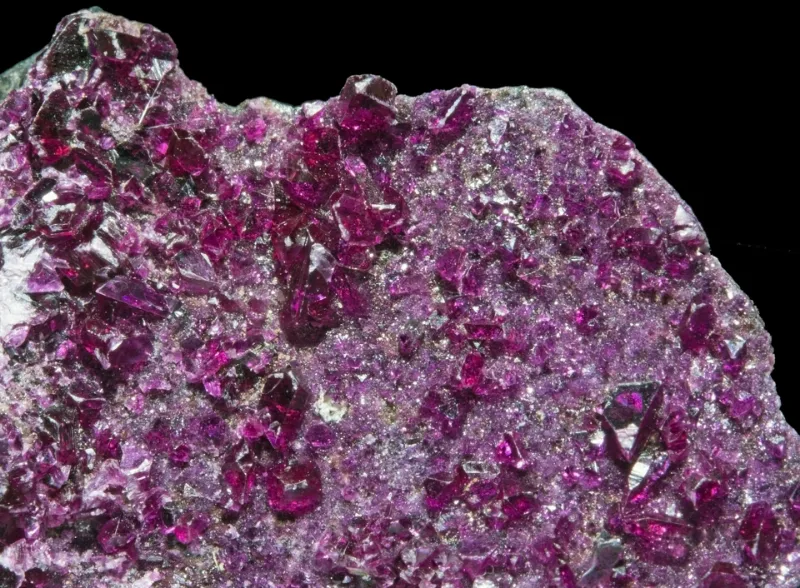
Kämmererite
Kämmererite is chromium-bearing clinochlore, a member of the chlorite group, and its colour is the only reason most people have heard of it: an intense magenta running to violet-red and raspberry that no other mineral produces. The crystals are small hexagonal plates, often stacked into barrel shapes, and a crust of them glitters like nothing else on a specimen shelf. Nordenskiöld named it in 1841 after August Alexander Kämmerer, a Russian mining official.
The colourant is chromium substituting for aluminium in the structure — the same element that makes emerald green and ruby red, doing a third thing here. It is soft, 2 to 2.5, and it cleaves into flakes that bend and stay bent, which is the classic separation from mica, whose flakes are elastic and spring back. Chromian clinochlore is the correct modern name; kämmererite survives as a variety name, as does kotschubeite for the rose-red material.
In short
- Colour
- Violet and pink
- Mineral
- Silicate
- Formula
- (Mg,Fe,Cr)₆(Si,Al)₄O₁₀(OH)₈
- Hardness
- 2–2.5 on the Mohs scale
- Crystal system
- Monoclinic
- Found in
- The Kop Krom chromite mine near Erzurum in Turkey is by far the best source and has supplied almost every good specimen of the last forty years. The type locality is in the Urals, at Bissersk. Others are Val Malenco in Italy, Norway, Greece, Brazil, and Pennsylvania and California in the United States.
- Element
- Water
- Planet
- Neptune
- Chakra
- Crown
- Handling
- Keep out of water
How it forms
It grows in and around chromite deposits in serpentinite. Chromium-rich fluid moving through altered ultramafic rock leaves chlorite behind in the cracks and cavities, and that chlorite takes chromium into its structure. The company on a specimen is chromite, serpentine, and sometimes the green uvarovite garnet, which is coloured by the same element in yet another mineral.
In human hands
Described in 1841 and a collector mineral ever since, never a gem: it is far too soft to cut and much too rare to waste on experiments. Turkish material reaching mineral shows from the 1980s made it widely recognised, and prices for the best plates are substantial. The crystal trade adopted it in the 2000s, mostly selling small matrix specimens rather than anything worked.
Varieties and trade names
- Kop Krom kämmererite
- Turkish specimens, the brightest magenta and the best formed; the standard for the mineral.
- Uralian kämmererite
- From the type locality at Bissersk; historic specimens in old museum collections.
- Kotschubeite
- Another chromian clinochlore variety name, rose-red rather than magenta, from the same rocks.
- Clinochlore
- The parent species, green to colourless; the chlorite page here covers the group it belongs to.
- Chromian chlorite in serpentinite
- Massive pink-violet material, used occasionally as a lapidary curiosity where enough of it occurs.
Telling it from a fake
The colour alone almost settles it, but check the softness: a fingernail marks it and a pin cuts it. Erythrite is a similar pink, a cobalt arsenate, more crimson and in radiating needles rather than plates. Lepidolite is lilac and micaceous, and its flakes spring back. Purpurite is darker, almost metallic, and massive. Charoite is fibrous and swirled and much harder. If the crystals are hexagonal plates on a dark serpentinite and look wet with colour, it is this.
None of this needs a laboratory, and none of it is proof. A shop that will not say whether a stone is treated has answered the question; ask, and have the answer written on the receipt.
What it is said to do
The crystal literature reads it as a crown stone and associates it with grace, with unexpected joy and with rarity itself; it is given to Neptune and to Pisces and Scorpio. Its reputation owes a good deal to how few pieces exist. There is no older tradition attached to it, and it is not a stone anyone has ever carried, since a week in a pocket would destroy it.
Living with it
Do not wash it, rub it, carry it or handle the crystals. A specimen should be picked up by its matrix and kept in a case where dust cannot settle on the plates, since cleaning them is not possible. Light does no harm. Water can loosen the crust from the rock and will dull the lustre; a soft blower is the only cleaning it should get.
In magic
Kammererite has almost no place in practice, because it cannot be handled: the crystals crumble and the colour lives in a crust. Collectors who also keep an altar give it a place there as a stone of calm and of quiet, unexpected joy, to be looked at rather than used. It is the one stone on this site the craft, honestly, mostly leaves alone.
- Energy
- Receptive
- Day
- Thursday
- Worked for
- Calm and peace
More of this colour
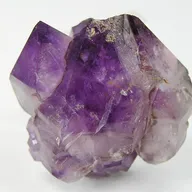 Amethyst
Quartz that grew purple in the dark, and the stone everyone starts with.
 Fluorite
The stone that gave fluorescence its name, in every colour at once.
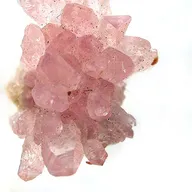 Rose quartz
The pink one, given away more often than it is bought.
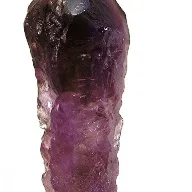 Ametrine
Amethyst and citrine in the same crystal, from one mine in the Bolivian jungle.
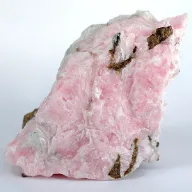 Bustamite
A pale pink manganese silicate from the world's strangest ore bodies, and rhodonite's quieter cousin.
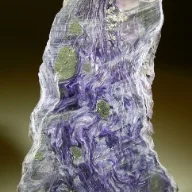 Charoite
A violet rock that exists in one valley in Siberia and nowhere else on Earth.
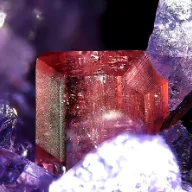 Phosphosiderite
A soft lilac iron phosphate, named after the two things in it.
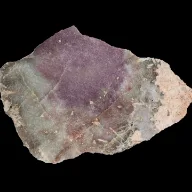 Lepidolite
Lilac mica, and the rock the world's lithium was first found in.
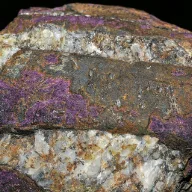 Purpurite
A pegmatite phosphate that rusted purple instead of brown.
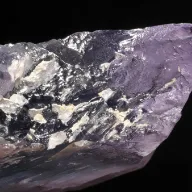 Spodumene
The lithium ore that turns up as pink gem crystals the length of a man.
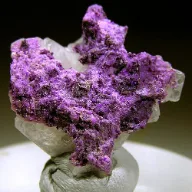 Sugilite
A purple that only exists because one manganese mine in the Kalahari flooded the right way.
 Tanzanite
One hill in Tanzania has all of it, and it was only found in 1967.
 Tourmaline
Thirty-odd minerals sharing one crystal shape, and every colour there is.